Quick Picks
| Pick | Product | Why | |
|---|---|---|---|
| Listed aerodynamic shaping and accessories | Thule Motion 3 XXL | Listed wing-shaped profile with a forward-leaning nose for reduced drag and fuel efficiency; listed accessories include an interior box light, protective box liner, and storage cover | Check Price on Amazon |
| Listed dual-side loading and a stated test-center claim | Thule Force 3 XXL US | Listed dual-side cargo access; listing states the box was extensively tested for road safety and durability in the Thule Test Center, with no protocol or result stated | Check Price on Amazon |
Disclosure: We earn a small commission from qualifying Amazon purchases at no extra cost to you.
As an Amazon Associate we earn from qualifying purchases. This page contains affiliate links, and we may receive a commission if you buy through them — at no extra cost to you.
As an Amazon Associate, we earn from qualifying purchases.
Last Updated: September 2026
Look, these two boxes get cross-shopped constantly, and for good reason: they are both large Thule roof boxes from the same generation, and the listings for both describe a SlideLock system with separate locking and opening functions that automatically locks the lid in place and indicates when the box is closed securely. That one shared line is where the similarity is clearest. Where they diverge is in what each listing chooses to emphasize — aerodynamic shaping and an accessory ecosystem on one, dual-side access and a stated road-safety and durability validation claim on the other.
This comparison is built strictly from the published Amazon listing information for each ASIN, checked on September 6, 2026. No one on this site drove with either box, mounted either box, or weighed anything. What follows is a close reading of what each manufacturer listing actually claims, and what those claims plausibly mean for the way you'd use the box.
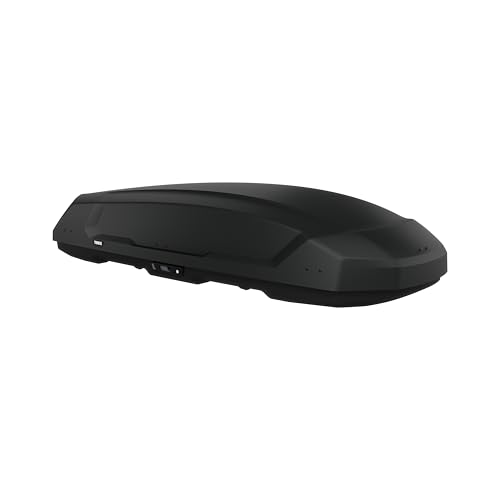
- Offers durability and maintains a sleek appearance, designed to handle daily use and the demands of active lifestyles
- A quick, secure, and intuitive mounting system that indicates when the cargo box is safely attached with a simple click
Quick Answer
Consider the Thule Motion 3 XXL if aerodynamic shaping and accessory expansion matter to you. Its listing describes a wing-shaped profile with a dynamic, forward-leaning nose for reduced drag and fuel efficiency, and it states that available accessories include an interior box light, a protective box liner, and a storage cover. The supplied Thule Force 3 XXL US record does not address these attributes, which is not evidence either way.
Consider the Thule Force 3 XXL US if you load and unload from whichever side of the car you happen to be standing on. Its listing describes easy access to cargo from both sides of the vehicle. It also states that the box was extensively tested for road safety and durability in the Thule Test Center, without giving a protocol or a result. The supplied Thule Motion 3 XXL record does not address opening sides, so no comparison follows from that silence.
Honestly, neither listing establishes a capacity figure, a weight, an exterior dimension, or a warranty term, so this is a feature-set comparison rather than a numbers comparison. Those missing fit, dimension and load-rating details are purchase constraints in their own right: confirm vehicle, rack, mount and box compatibility, and each applicable load limit with the equipment and cargo weights it is defined against, from Thule's specifications and your vehicle's manual before either box is a candidate. Anyone telling you one of these is definitively "bigger" or "lighter" based on these two listings is extrapolating.
Full Comparison Table
| Feature | Thule Motion 3 XXL | Thule Force 3 XXL US |
|---|---|---|
| Aerodynamic shaping | Wing-shaped profile with a dynamic, forward-leaning nose for reduced drag and fuel efficiency | Described as sleek in appearance; no drag or fuel-efficiency claim in the listing |
| Mounting system | PowerClick quick-mount system with an integrated torque indicator that "clicks" when properly mounted | Quick, secure, intuitive mounting system that indicates safe attachment with a simple click |
| Lid closure | SlideLock with separate locking and opening functions; auto-locks lid, indicates secure closure | SlideLock with separate locking and opening functions; auto-locks lid, indicates secure closure |
| Opening side | Not stated in the supplied listing information | Easy access to cargo from both sides of the vehicle |
| Lid handling | Sturdy lid with a wide handle for one-handed opening and closing | Not stated in the supplied listing information |
| Named accessories | Interior box light, protective box liner, storage cover | Not stated in the supplied listing information |
| Durability claim | Not stated in the supplied listing information | Extensively evaluated for road safety and durability at the Thule Test Center |
| Price | Check Price on Amazon | Check Price on Amazon |
Design & Build Quality
Here's the clearest structural difference in the published information. The Motion 3 XXL listing describes a wing-shaped profile with a dynamic, forward-leaning nose, and explicitly ties that shape to reduced drag and fuel efficiency. The Force 3 XXL US listing describes durability and a sleek appearance built for daily use and active lifestyles — an aesthetic and toughness framing, not an aerodynamic one.
That matters more than it sounds. A drag claim is a functional claim about highway behavior; "sleek appearance" is a styling claim. If long interstate legs at speed are your normal use, the Thule Motion 3 XXL listing is the one that states an efficiency claim; the supplied Thule Force 3 XXL US record does not address drag or fuel efficiency, which does not establish that it performs differently.
On the build side, the Force listing is the one that points to a validation program: extensive evaluation for road safety and durability at the Thule Test Center. Read that carefully — it's the manufacturer's own facility, so it's a first-party quality claim rather than independent third-party certification. It's still a specific, meaningful statement, and the Motion listing supplied here doesn't include an equivalent.
The Thule Motion 3 XXL listing describes a sturdy lid design with a wide handle for smooth opening and closing with just one hand. The supplied Thule Force 3 XXL US record does not address lid handling, so it does not establish that the Force lid is harder to work — no ergonomic comparison follows from the silence. Whichever box you choose, load and access it from stable, approved footing and follow the manufacturer's handling instructions; a one-handed lid does not change what is safe to do while carrying gear.
Preferred option: not established by the supplied data. The Thule Motion 3 XXL listing documents a wing-shaped, forward-leaning profile and a wide-handle lid for one-handed opening and closing. The supplied Thule Force 3 XXL US record does not address either attribute, so the missing counterpart facts would be needed before treating this as a tradeoff. Check Price on Amazon
Features & Functionality
Start with what's identical. Both boxes list the same SlideLock system: separate locking and opening functions, automatic lid locking, and an indication that the box is closed securely. Functionally, that's a closure design meant to remove the "did I actually latch it?" question before you pull onto the highway. Neither box has an advantage here.
Mounting is where the language diverges in a way worth parsing. The Motion 3 XXL names its system — PowerClick — and describes an integrated torque indicator that clicks when the box is properly mounted. The Force 3 XXL US describes a quick, secure, intuitive mounting system that indicates safe attachment with a simple click, but the supplied listing doesn't name a torque indicator. Both are click-confirmation designs by their own descriptions; the Motion's is the more specifically described of the two.
The Force's standout feature is dual-side access. Its listing states you get easy access to cargo from both sides of the vehicle. If you park on a street where the traffic side is a bad place to stand, or you're loading kids' gear from a driveway on one trip and a curb on the next, that's a genuine day-to-day convenience — and the supplied Motion listing doesn't state which side or sides it opens from.
Accessories tilt the other way. The Motion 3 XXL listing names an interior box light, a protective box liner, and a storage cover as available accessories. A box light is the kind of thing you don't think about until you're repacking skis at 6 a.m. in a dark lot. The supplied Force listing doesn't name accessories, which isn't the same as saying none exist — just that this record doesn't list them.
Preferred option: not established by the supplied data. The Thule Force 3 XXL US listing documents easy access to cargo from both sides of the vehicle. The Thule Motion 3 XXL listing documents the PowerClick quick-mount system with an integrated torque indicator and states that available accessories include an interior box light, a protective box liner and a storage cover. Each record is silent on the other's attributes, so the missing counterpart facts would be needed before weighing a tradeoff. Check Price on Amazon
Performance
This is the section where I have to be straight with you: neither supplied listing contains a capacity figure, a load rating, a weight, an exterior dimension, or a crossbar-spread requirement. So "performance" here can only mean what the feature claims imply.
The one performance-adjacent claim on the table is the Motion 3 XXL's wing-shaped, forward-leaning nose described as reducing drag and improving fuel efficiency. That is the seller's own claim about the shape. The supplied information contains no aerodynamic measurement or comparison for either finished box, so it supports no conclusion about actual drag or fuel savings. The listing does not quantify the reduction, and no fuel-consumption figure for either box appears in the supplied information, so treat it as a stated design intent rather than a number you can budget around.
For the Force 3 XXL US, the performance-relevant claim is the manufacturer's statement that the box was extensively evaluated for road safety and durability at the Thule Test Center. That is a seller statement that testing was carried out in the manufacturer's own facility. The listing gives no protocol, duration, result, or standard, so it establishes only that the claim was made — not a verified level of highway integrity or durability, and not a comparison with the other box.
Preferred option: not established by the supplied data. The two listings make claims in different dimensions — efficiency versus in-house safety validation — and neither is quantified.
Price & Value
The supplied evidence doesn't fix a price relationship between these two, so I'm not going to invent one or tell you which is the premium tier. Check both before deciding: Thule Motion 3 XXL and Thule Force 3 XXL US.
What I can say about value is structural. The Thule Motion 3 XXL listing states that available accessories include an interior box light, a protective box liner and a storage cover. It does not state whether any of them are included with the box or sold separately, and no price appears in the supplied information, so confirm the actual offer contents on the product page before budgeting. Separately, the Thule Force 3 XXL US listing describes easy access to cargo from both sides of the vehicle as a feature of that box.
How We Research
The research method here is narrow and worth stating plainly. For each box, we pulled the Amazon Creators API verified product record and read every product listing feature bullet published for that exact ASIN, on September 6, 2026. We then compared the two feature sets line by line, noting where the wording is identical (SlideLock), where it's similar but differently specified (the mounting systems), and where a claim appears on one listing and simply isn't addressed on the other.
No physical handling, mounting, driving, weighing, or timing was involved at any stage. Where a field is absent from a listing, we've said so rather than guessing — an unstated dimension is unknown, not zero.
If you're still working out whether a roof box is the right call at all, our guides on choosing a roof cargo box and roof rack crossbar compatibility cover the fitment questions these listings don't.
Which Should You Buy?
- You drive long highway miles and care about fuel burn. Thule Motion 3 XXL. Its listing describes a wing-shaped profile with a forward-leaning nose for reduced drag and fuel efficiency, though the supplied information quantifies no saving and the Thule Force 3 XXL US record does not address drag either way. Check Price on Amazon
- You park street-side and load from whichever side is safe. Thule Force 3 XXL US, for the listed easy access from both sides of the vehicle. Check Price on Amazon
- You want the box light, liner, or storage cover. Thule Motion 3 XXL — its listing states that available accessories include those three; confirm with the seller whether they are included or sold separately. The supplied Thule Force 3 XXL US record does not address accessories.
- You want a stated road-safety testing claim in writing. Thule Force 3 XXL US, whose listing states the box was extensively tested for road safety and durability in the Thule Test Center. The listing reports no protocol or result, so the claim stands as a seller statement rather than a verified outcome.
- You mount and dismount the box seasonally and want mounting confidence. The Thule Motion 3 XXL listing describes the PowerClick quick-mount system with an integrated torque indicator that clicks when the box is properly mounted. The Thule Force 3 XXL US listing describes a quick, secure and intuitive mounting system that indicates safe attachment with a simple click. The supplied information does not compare them.
- Before any of the above. Neither listing supplied here states capacity, weight, dimensions, or load ratings, and those are purchase constraints rather than tiebreakers. Confirm vehicle, rack, mount and box compatibility, plus each applicable load limit with the equipment and cargo weights it is defined against, from Thule's specifications and your vehicle's manual before you buy either one.
Frequently Asked Questions
What is the main difference between the Thule Motion 3 XXL and the Force 3 XXL?
The Thule Motion 3 XXL listing describes a wing-shaped profile with a forward-leaning nose for reduced drag and fuel efficiency, and states that available accessories include an interior box light, a protective box liner and a storage cover. The Thule Force 3 XXL US listing describes easy cargo access from both sides of the vehicle and states the box was extensively tested for road safety and durability in the Thule Test Center, with no protocol or result given. Each record is silent on the other's attributes, so these are differences in listing content rather than established performance differences.
Do both boxes open from both sides?
The Thule Force 3 XXL US listing states it provides easy access to cargo from both sides of the vehicle. The supplied Thule Motion 3 XXL listing does not address which side or sides it opens from, so that's unknown from this information rather than confirmed either way.
Which one is easier to install?
Both listings describe click-confirmed mounting. The Motion 3 XXL specifies the PowerClick quick-mount system with an integrated torque indicator that clicks when properly mounted; the Force 3 XXL US describes a quick, secure, intuitive system that clicks when safely attached. The supplied information doesn't give installation times for either.
Do they use the same lock system?
Yes, as described. Both listings specify a SlideLock system with separate locking and opening functions that automatically locks the lid in place and indicates when the box is closed securely.
Is the Motion 3 XXL actually more fuel efficient?
The manufacturer's listing ties the wing-shaped, forward-leaning nose to reduced drag and fuel efficiency, but publishes no figure for the improvement. The supplied information contains no fuel-consumption number for either box, so treat it as a stated design goal rather than a quantified saving.
What accessories are available?
The Thule Motion 3 XXL listing names an interior box light, a protective box liner, and a storage cover as available accessories. The supplied Thule Force 3 XXL US listing does not name accessories, which means this record doesn't address them.
How much can each box hold?
Neither supplied listing states a capacity, internal dimension, weight or load rating. Before purchase, confirm the box's own load rating, the roof rack and crossbar load limits, and your vehicle's roof load limit — each with the equipment and cargo weights it is defined against — from Thule's specifications and your vehicle's manual. General guidance on safe consumer product use and recall notices is available from the CPSC and USA.gov's consumer protection resources.
Final Verdict
On the published evidence alone, no overall pick is established. The Thule Motion 3 XXL listing makes an explicit drag and fuel-efficiency claim for its wing-shaped, forward-leaning nose, and states that available accessories include an interior box light, a protective box liner and a storage cover. The supplied Thule Force 3 XXL US record does not address those attributes, which neither confirms nor rules them out for that box. Check Price on Amazon
The Thule Force 3 XXL US listing states easy access to cargo from both sides of the vehicle, which the supplied Thule Motion 3 XXL listing simply doesn't address either way. Its listing also states the box was extensively tested for road safety and durability in the Thule Test Center, with no protocol or result given. Both are documented features of that listing rather than a measured advantage over the other box. Check Price on Amazon
What has to be settled first is fit and load: the listings supplied here state no capacity, weight, dimensions or load ratings for either box. Confirm vehicle, rack, mount and box compatibility, and each applicable load limit with the equipment and cargo weights it is defined against, from Thule's specifications and your vehicle's manual against your specific crossbars. Only once those constraints are met do the documented feature differences above matter.
Sources & Methodology
This website does not physically test or lab-test products, and nobody here has mounted, driven with, or measured either of these cargo boxes. What went into this page is a line-by-line reading of the Amazon Creators API verified product records and the published product listing feature bullets for ASIN B0CY3KQFDN and ASIN B0DYQDJJ2V, both retrieved on September 6, 2026, with claims kept in the manufacturer's own scope and gaps identified as gaps.
For roof boxes specifically, that kind of reading is genuinely useful for the decisions listing copy actually settles — how the lid locks, which sides open, whether the shape is marketed as aerodynamic, what accessories exist — and genuinely insufficient for the ones it doesn't, like real-world capacity, wind noise, and fitment on your particular crossbars. Use this to narrow the choice, then confirm dimensions and vehicle fit against Thule's own specifications before you spend.