As an Amazon Associate this site earns from qualifying purchases.
Quick Picks
| Carrier | Best for | Key published specs | Link |
|---|---|---|---|
| StowAway Standard Cargo Carrier with SwingAway Frame for 2" Hitch- Black | A frame listed as swinging out for access to the back of the vehicle | 12.5 cu ft, 200 lbs, 49 x 21 x 24 in, ten year warranty | Check Price on Amazon |
| CURT 18153 Folding Hitch Basket Cargo Carrier | Awkward, oversized loads that will not fit in a box | 60 x 24 in, 500 lb, 6 in sides, tubular steel | Check Price on Amazon |
| Let's Go Aero GearSpace Slideout Hitch Cargo Carrier -Dark Gray | Shoppers who want a slideout design and will verify specs first | Record lists 150 Pounds and 68 x 33 x 40 inches, unlabelled | Check Price on Amazon |
| Buyers Products 1707020 Poly Hitch Mounted Cargo Carrier | Weatherproof, lockable hauling of tools and dirty gear | 17 cu ft, 200 lbs, 23 x 51 x 26 in, poly chest on steel frame | Check Price on Amazon |
| WEIZE Folding Hitch Mount Cargo Carrier Basket 60" x 20" x 6" with Waterproof Bag | Basket buyers who do not want to source a bag, net and straps separately | 60 x 20 x 6 in, 500 lbs, includes bag, net, two straps | Check Price on Amazon |
| 6 Rooftop Cargo Tie Down Hook Straps - Secure Any Car Roof Bag | Adding tie-down anchor points, where your bag's and vehicle's own instructions allow it | 6 straps, 12 anchor points, 900D PP webbing | Check Price on Amazon |
Disclosure: We earn a small commission from qualifying Amazon purchases at no extra cost to you.
As an Amazon Associate, we earn from qualifying purchases.Last Updated: September 2026
Look, most people shopping for extra cargo space start with the wrong question. They ask "which box is best?" long before they have worked out whether the gear belongs on the roof at all. That single decision — roof or hitch, hard or soft, box or basket — drives everything downstream: what you can physically lift overhead, what you can lock, what fits under your garage door, and what your vehicle is actually rated to carry.
This guide is built to fix that. You will learn how cubic-feet figures are calculated and why an outside dimension never equals usable volume, why the weight rating printed on a carrier is almost never the number that limits you, what "dual side opening" really buys, and which published specs on an Amazon listing deserve your trust.
One thing up front, because it changes how you should read this page. The verified product records available here cover hitch-mounted carriers plus one rooftop tie-down strap set. There is no rooftop cargo box among them. So the roof-box sections below teach you to read a spec sheet properly, and the product sections cover the hardware this page can actually document. That is an honest split, and it is more useful than pretending otherwise.
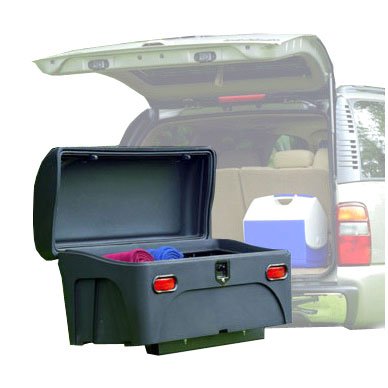
- Heavy duty hitch cargo box on a rugged swingaway
- Frame swings out for clear access to the back of your vehicle
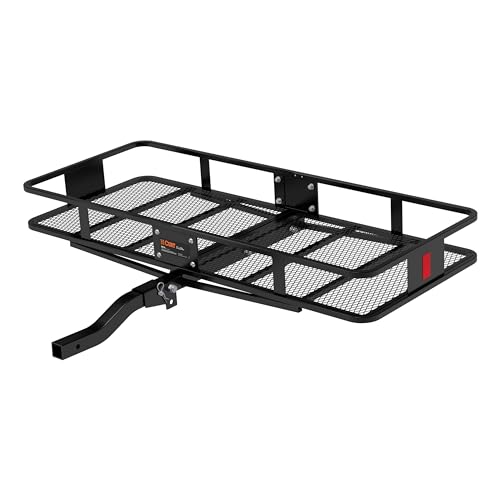
- 6" tall sides keep items more secure during travel
- Frees up space inside the vehicle for passengers and cargo
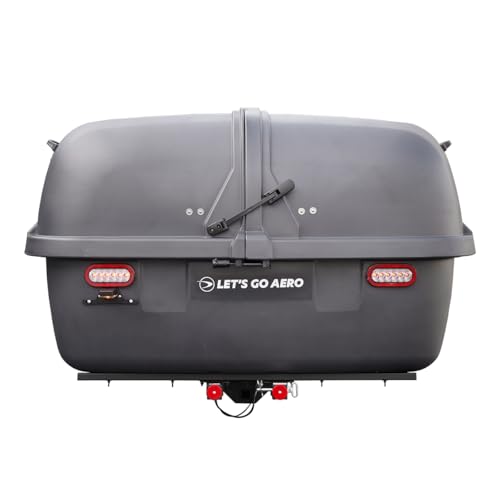
- Item Package Quantity - 1
- base_product
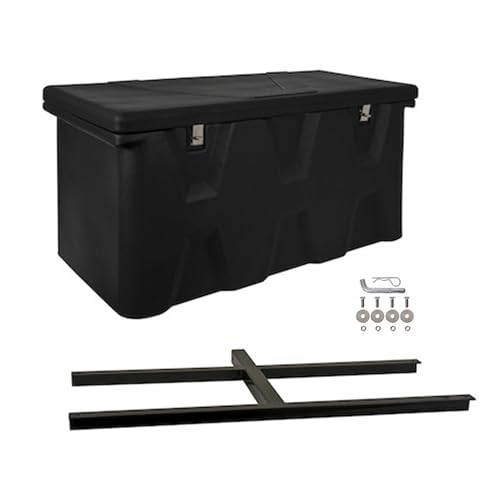
- LARGE POLY CARGO BOX FOR TRUCK BED STORAGE: Dent-resistant, high density polyethylene construction with double-walled lid offers secure, waterproof tool box and organizer bin for
- DURABLE POWDER-COATED STEEL FRAME: Pre-drilled for easy assembly, corrosion-resistant black powder-coated steel frame ensures long-lasting outdoor storage box performance for job
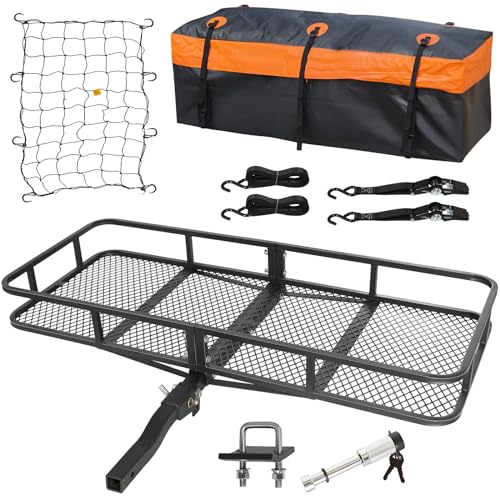
- Extra Storage Capacity: Get an extra roomy 10 square ft. of space behind your vehicle with Weize hitch-mounted cargo carrier! The 2" shank works great with any vehicle that has a
- Ultra-Durable: This trailer hitch cargo carrier is constructed of heavy-duty steel which can haul up to 500 lbs of cargo, gear, and equipment, the powder coating also protects it
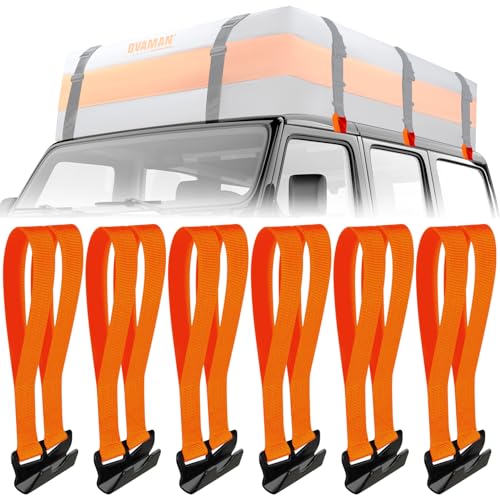
- 【SAFETY COMES FIRST】No more using straps that go through the interior of your car to tie down your roof luggage. This is illegal in some states and can prevent airbags from
- 【COST-EFFECTIVE 】Ideal for carrying bulky luggage without the need for expensive roof bars or roof racks, works with any brand of roof bags, kayaks, surfboards, snowboards and
Types of Cargo Carriers Explained
A cargo carrier is any external load platform or enclosure that moves gear out of the cabin. The five common formats split cleanly by where they mount and whether they enclose the load.
| Type | Where it mounts | Usually chosen for | What to verify on the listing |
|---|---|---|---|
| Hard-shell roof box | Whatever mounting system its maker specifies | Enclosed long-trip storage | Stated internal cubic feet, lock hardware, the exact vehicle and rack fit the maker approves |
| Soft roof bag | Whatever mounting system its maker specifies | Low cost, folds away in the off-season | The mounting its own instructions require, seam and zipper construction, tie-down count |
| Roof basket | Crossbars on the roof | Odd-shaped items, gear you strap down rather than enclose | Load rating, whether a net or bag is included |
| Hitch-mounted box | 2-inch receiver | Loading at waist height instead of overhead | Cubic feet, load rating, lock, whether it swings or slides for hatch access |
| Hitch-mounted basket | 2-inch receiver | Cheap capacity, dirty or bulky gear | Basket dimensions, side height, folding shank, ground clearance |
The honest summary: roof carriers sit clear of the area behind the vehicle, while hitch carriers spare you the overhead lift but sit where they can obstruct a hatch unless the design specifically addresses that. The supplied records document no rooftop box, so they establish nothing about fit, clearance, noise, security or cost for that format; the vehicle's, rack's and carrier's own fit, clearance, approved mounting and loading requirements govern, and a category name does not establish any of them. For a deeper split, see our rooftop cargo box vs hitch carrier comparison.
Rooftop Cargo Box Cubic Feet Explained
Cubic feet on a cargo carrier listing should describe usable interior volume, not the shape of the outside. That distinction is where a lot of shoppers get burned, and you can catch it with arithmetic before you buy.
Here is a worked example from a product on this page. For the StowAway Standard Cargo Carrier with SwingAway Frame for 2" Hitch- Black, the listed 49 x 21 x 24 inch envelope computes to roughly 14.3 cubic feet, while the listing states the box holds up to 12.5 cubic feet. The listing does not say whether that 12.5 figure describes usable interior volume or something else, so the gap of nearly two cubic feet is not explained by the record. If you are packing to the inch, confirm what the number measures before you rely on it.
Run the same check on a second listing here. The Buyers Products 1707020 Poly Hitch Mounted Cargo Carrier listing states 23x51x26 inches and says the bin offers 17 cubic feet of functional space, but it does not say whether those dimensions are external or internal, so multiplying them cannot confirm or redefine what the 17 cubic feet covers. If you are packing to the inch, ask the manufacturer for the internal dimensions and the opening size rather than inferring them.
When you run this on a roof box, work from dimensions the maker clearly labels as internal, plus the opening size, since those are what decide whether a specific object fits. Length times width times height in inches, divided by 1,728, only describes whichever envelope those dimensions actually measure. If a listing leaves its dimensions or its cubic-feet figure undefined, or the two conflict, treat the numbers as unclear and ask the manufacturer rather than guessing.
Hard Shell vs Soft Rooftop Carrier
The short answer: a hard shell buys you a lockable, rigid, weather-sealed enclosure that stays mounted; a soft bag buys you low cost and a package that folds into a closet in October. Neither is universally better, and the deciding factor is usually storage space at home plus how often you will actually use it.
Choose a hard shell if you want an enclosed, lockable format. Choose a soft bag if you need capacity twice a year or have nowhere to store a rigid box. Either way the deciding constraint is what your vehicle's, rack's and carrier's own instructions approve for your car, including clearance and how the carrier must be mounted and loaded, so read those before you settle on a format.
That last case matters. The seller of the 6 Rooftop Cargo Tie Down Hook Straps - Secure Any Car Roof Bag (ASIN B0CZRL9PTN) markets that set as requiring no roof rack and as an alternative to buying roof bars or roof racks, and makes fitment conditional on the rubber door seal peeling back far enough to expose the metal door frame. That is the seller's positioning for its own straps; the supplied records state no load rating, no speed limit and nothing about whether any particular bag may be carried on a bare roof, so follow your bag's and your vehicle's own instructions. Just be clear on what you are buying: straps are an anchoring accessory, not a carrier.
Roof Cargo Carrier Weight Capacity
The number printed on a carrier is a ceiling for that part alone. It is not by itself your limit: the crossbars or receiver have their own rating, and your vehicle manufacturer states a limit in the owner's manual. A vehicle's roof figure is typically a dynamic limit on the total load carried on the roof, so the rack and the empty carrier count against it before any cargo does. Read the vehicle, rack and carrier manuals together and work out what each one allows for your setup; the supplied product records do not state rack or empty-carrier weights, so this page cannot do that arithmetic for you.
The CURT 18153 Folding Hitch Basket Cargo Carrier, 60" x 24", 500 lb is listed at 60 by 24 inches with a 500 lb capacity and 6-inch tall sides. That figure rates the basket alone. What you may actually carry is whatever the vehicle, the receiver, the mounts and the carrier each allow as their own instructions define those limits, counting equipment and cargo wherever a limit includes them, so confirm your receiver is genuinely compatible and rated before relying on the 500 lb number.
On the roof it is stricter still, because roof limits are usually dynamic ratings that assume the vehicle is moving, and the rack and empty carrier count against them before your cargo does. Weigh what you actually plan to pack, not what you hope will fit. Compare the published figures in the Quick Picks table above rather than assuming carriers in the same format are rated alike.
Dual Side Opening Roof Boxes: What the Term Means
A dual side opening box can be opened from the driver's side or the passenger's side. The hinge and closure arrangement varies from model to model, so work from the opening and closing instructions supplied with the box you buy. The practical value is loading from the kerb on a narrow street and reaching gear from whichever side you have parked toward.
It is a convenience feature, not a capacity feature. A dual-opening box does not hold more than a single-opening box of the same volume. Whatever closures a given box uses, secure every one of them exactly as its instructions specify before you drive. None of the products documented on this page is a dual side opening roof box, so we are not naming one here.
Key Features to Look For, Ranked
- Load rating in context. Match the carrier's published rating against your receiver or roof limit before anything else.
- Secure closure. A locking latch or pad-lockable hasp changes where you can park. Check whether locks are included or sold separately.
- Rear access. On a hitch carrier, a swingaway or slideout frame is intended to move the carrier clear of the back of the vehicle. Confirm the actual swept clearance on your own vehicle and whether the maker permits operating the frame with a load in place.
- Weather handling. Look for a stated waterproof construction, a sealed lid, or a drain plug so trapped water has somewhere to go.
- Usable footprint. Interior cubic feet for boxes, floor area and side height for baskets.
- Corrosion protection. Powder coating and polyethylene both resist weather, but read what the seller actually claims about outdoor storage.
- Storage when idle. A folding shank or a chest that comes off the frame decides whether the thing lives in your garage or in your driveway.
Common Mistakes to Avoid
- Trusting the carrier's rating as your limit. It is only one of the ratings that applies; check the vehicle, rack and carrier manuals together, and remember a vehicle roof limit covers the rack and empty carrier as well as the cargo.
- Buying volume you cannot reach. A tall roof box on a lifted SUV is a step-ladder purchase you did not budget for.
- Forgetting your garage. Measure your door height with the carrier fitted, not the vehicle alone.
- Assuming an accessory is a carrier. Straps, nets and bags are add-ons; confirm you are buying the load-bearing part.
- Skipping the receiver size. Several carriers here specify a 2-inch receiver or shank, so measure your receiver opening before ordering.
- Ignoring recalls. The U.S. Consumer Product Safety Commission publishes recall notices for consumer products at cpsc.gov, and it is worth a search before you buy any load-bearing accessory.
Budget Considerations
Prices move constantly, so judge value by what the listing includes rather than by a number you saw last week. Three things reliably shift the real cost.
First, bundled accessories. A basket that arrives with a waterproof bag, a cargo net and tie-down straps may cover items you would otherwise buy, though whether those particular pieces are the restraint your load needs is set by the load and the carrier's instructions rather than by the bundle.
Second, warranty length. The StowAway Standard Cargo Carrier with SwingAway Frame for 2" Hitch- Black is listed with a ten year warranty. The seller of ASIN B0CZRL9PTN states a lifetime warranty on breakage or tearing. A warranty term is not a statement of expected service life or durability, so read what each one actually covers and excludes.
Third, lock hardware. If padlocks are sold separately, add them to your total. Check the current price on Amazon for each carrier before you compare, and read our best hitch cargo carriers roundup for format-by-format context.
Our Top Recommendations
StowAway Standard Cargo Carrier with SwingAway Frame for 2" Hitch- Black — Best for a frame designed to swing clear of the back of your vehicle
The frame is described as a swingaway design that swings out for clear access to the back of your vehicle. Whether it clears your particular hatch, and what load StowAway allows to be in the box while the frame is swung, are things to confirm in the product instructions rather than assume.
StowAway's listing rates the box at 12.5 cubic feet and 200 lbs of gear, with the box measuring 49 x 21 x 24 inches. The listing states the box includes a locking latch, taillights, a license plate bracket and a drain plug for cleaning. The supplied records do not establish that these items make any particular installation road legal, or that they resolve visibility or clearance, so check the lighting, plate and visibility rules that apply where you drive.
It is listed as made in the USA with a ten year warranty.
CURT 18153 Folding Hitch Basket Cargo Carrier — Best for awkward loads that will not fit in a box
Baskets exist for the gear that defeats enclosures: generators, firewood, muddy bikes, a cooler you do not want in the cabin. CURT lists the 18153 at 60 by 24 inches with a 500 lb capacity and 6-inch tall sides.
The listing describes tubular steel construction, a folding shank that lets the carrier tilt up when not in use, and an angled shank that elevates the carrier for more ground clearance. The stated 60 by 24 inch size computes to about 10 square feet, but the CURT 18153 Folding Hitch Basket Cargo Carrier, 60" x 24", 500 lb record does not state that this is the usable floor, so ask CURT for the usable deck dimensions if you are planning a load around them.
The record describes an open basket and says nothing either way about locking, enclosure or weather protection. It also does not state that any bag, net or straps are included, so plan on sourcing whatever restraint your load and the carrier's instructions require.
Let's Go Aero GearSpace Slideout Hitch Cargo Carrier -Dark Gray — Best for buyers willing to confirm specs with the manufacturer first
Here is the thing: this listing's feature bullets are close to useless as a spec sheet. The verified product record for the GearSpace lists only VEHICLE_CARGO_CARRIER as a category, a package quantity of 1, the figure 150 Pounds, and dimensions of 68 x 33 x 40 inches, without labelling what the weight and dimension figures refer to.
That 150 Pounds could plausibly be a load rating or the shipping weight, and 68 x 33 x 40 inches could be the carrier or the carton. We are not going to guess, and neither should you.
The slideout concept is genuinely appealing — it targets the same rear-access problem the swingaway solves. But buy this one only after confirming capacity and mounted dimensions directly with the manufacturer or the current listing page.
Buyers Products 1707020 Poly Hitch Mounted Cargo Carrier — Best for weatherproof, lockable hauling of tools and dirty gear
Buyers Products lists this carrier at 23x51x26 inches, states the bin offers 17 cubic feet of functional space, and rates it to hold up to 200 lbs. The listing aims it at job site, camping and utility use.
The listing describes a dent-resistant high density polyethylene chest with a double-walled lid, a corrosion-resistant black powder-coated steel frame, and two pad-lockable hasps with padlocks sold separately. Poly over steel is a sensible pairing here: the plastic takes the weather and the scuffs, the steel carries the load.
It fits a 2-inch receiver, ships with a 5/8 inch hitch pin, and is listed as made in the USA. Two caveats worth pricing in. The Buyers Products 1707020 Poly Hitch Mounted Cargo Carrier (ASIN B08PZH9XK3) listing states that its two pad-lockable hasps come with padlocks sold separately, so those are your purchase. The same listing states the bin holds up to 200 lbs and offers 17 cubic feet of functional space, but it does not state how the weight rating and the volume figure relate, so weigh what you load rather than judging by how full the chest looks.
WEIZE Folding Hitch Mount Cargo Carrier Basket 60" x 20" x 6" with Waterproof Bag — Best for a basket buyer who wants the accessories included
WEIZE lists the basket at 60 by 20 by 6 inches with a 500 lbs capacity, steel construction and a 2-inch folding shank. What separates it from a bare basket is the bundle: the listing says the carrier ships with two 12ft 2200lbs tie down straps, one 36 by 60 inch cargo net and a waterproof cargo bag.
Those are items many basket owners buy separately, though whether they are the right restraint for a particular load depends on the load and on the carrier's own instructions.
Two things to read carefully. The listing advertises an extra roomy 10 square ft. of space, while the stated 60 by 20 inch size works out to about 8.3 square feet. Those two figures conflict, and the record does not define what surface either one measures, so ask WEIZE for the actual usable dimensions before planning a load around them. And WEIZE's own listing recommends parking the vehicle indoors and using truck bedliner paint to make the entire rack rustproof — an unusually candid note about the limits of the powder coating, and one you should factor in if the carrier will live outside year-round.
6 Rooftop Cargo Tie Down Hook Straps - Secure Any Car Roof Bag — Best for adding tie-down anchor points, subject to your bag's and vehicle's own instructions
Be clear on what this is: an anchoring accessory, not a carrier. The seller markets it as requiring no roof rack, but the supplied records do not establish that it provides adequate restraint for any particular bag, or that your vehicle's doors and airbags are compatible with hooks set at the door seal. It is not a substitute for a mounting system that your bag or your vehicle requires.
This set is six hook straps providing 12 tie down anchor points, made from what the seller describes as heavy duty 900D PP with double stitched and knotting stitched seams. The hooks are designed to sit between the door rubber seal and the door steel frame.
The seller states that running straps through the car's interior is illegal in some states and can prevent airbags from functioning properly, and markets these door-hook straps as an alternative; the supplied records do not establish that this arrangement is legal or safe on any particular car, so check the rules that apply to you and your vehicle maker's own guidance on door seals and airbags. The listing's only stated fitment check is whether the rubber door seal on your car can be peeled back far enough to expose the metal door frame where the hook sits, and that check alone does not establish that your bag, your roof and the load are approved. The seller offers a lifetime warranty on breakage or tearing.
How to Get the Best Deal on Amazon
- Compare what is in the box, not just the headline. A bundle with a bag, net and straps is a different purchase from a bare frame at a similar price.
- Check the receiver spec before the price. A 2-inch requirement is a hard filter on most of these.
- Read the current listing for changes. Sellers revise bullets and included hardware; the specs quoted here were retrieved on 6 September 2026.
- Add the hidden extras. Padlocks, hitch locks and a bag for an open basket all belong in your total.
- Know your recourse. USA.gov's consumer protection pages are the place to start if a seller will not honour a stated warranty.
Maintenance and Care Tips
Follow the cleaning and inspection procedure in your own carrier's instructions; the supplied records set out no care steps, cleaning agents or inspection intervals for these products. For the WEIZE Folding Hitch Mount Cargo Carrier Basket 60" x 20" x 6", the listing itself recommends parking the vehicle indoors and using truck bedliner paint to make the entire rack rustproof — that is WEIZE's guidance for its own basket, it does not extend to the other products here, and the record does not establish that the paint prevents rust.
The StowAway Standard Cargo Carrier with SwingAway Frame for 2" Hitch- Black listing states the box includes a drain plug for cleaning. The Buyers Products 1707020 Poly Hitch Mounted Cargo Carrier is listed with a high density polyethylene chest. Neither record states a cleaning method, so use the instructions supplied with the product.
Inspect the hitch pin, the lock hardware and any strap webbing on the schedule and by the method the product's own instructions set out. Our roof rack and crossbar guide covers rooftop hardware inspection in more depth.
How We Research
This page was built by reading published product data, not by using the products. For each carrier we pulled the Amazon Creators API verified product record and the product listing feature bullets, both retrieved on 6 September 2026, and worked only from what those state.
Where a listing gave dimensions and a volume or area figure, we did the arithmetic ourselves and reported when the two agreed or diverged. Where a record was thin — as with the GearSpace bullets — we said so rather than filling the gap from elsewhere. Nobody here weighed, mounted, loaded or drove with any of these carriers, and this site runs no lab.
Final Verdict
If you want one recommendation from this set, it is the StowAway Standard Cargo Carrier with SwingAway Frame for 2" Hitch- Black — because the frame is listed as swinging out for clear access to the back of the vehicle, and because 12.5 cubic feet with a locking latch, taillights and a ten year warranty is a coherent package rather than a pile of features. Confirm the actual swept clearance on your vehicle and what StowAway permits you to swing with a load in the box.
If your loads are dirty, bulky or heavy rather than neat, the CURT 18153 Folding Hitch Basket Cargo Carrier is the better logic at 60 by 24 inches and 500 lb. If you want that basket format with the accessories already included, the WEIZE bundle is the shortcut.
And if your gear is going on the roof, the useful takeaway from this page is not a product name. It is the method: multiply the dimensions, distrust the marketing area figure, and check the vehicle, rack and carrier manuals together before deciding your load, remembering that a vehicle roof limit has to cover the rack and empty carrier too.
Frequently Asked Questions
How many cubic feet do I need in a rooftop cargo box?
Work backwards from the bags, not from a number. Divide the volume you need by 1,728 after measuring your typical load in inches, then add margin for the shape you cannot pack tightly. As a sanity check on any listing, work from dimensions the maker clearly labels as internal, together with the opening size, since those decide whether a given object fits. If a listing does not define its dimensions or its cubic-feet figure, or the two disagree, ask the manufacturer instead of guessing.
Is a hard shell or a soft rooftop carrier better?
Hard shells are the enclosed, lockable format; soft bags fold away for storage at home. No rooftop box is documented in the supplied records, so this page cannot compare the two formats on security, weather sealing or on-road behaviour. Whether a particular bag may be carried without crossbars depends on that bag's own instructions and your vehicle's; the supplied records do not establish that door-hook straps substitute for the mounting system a roof bag requires.
What limits how much weight a roof carrier can hold?
Several ratings apply at once: the carrier's own, the rack or receiver and the mounts it attaches to, and your vehicle manufacturer's stated limit in the owner's manual. Each one applies as its own instructions define it, including whether equipment weight counts toward it. A vehicle roof limit is normally a dynamic limit on the whole roof load, so the rack and the empty carrier consume part of it before your cargo does. Consult all three manuals rather than assuming the carrier's number is what you can pack. A carrier rated for a big number does not raise the other two.
What does dual side opening mean on a roof box?
It means the lid hinges from both sides so you can open it from either side of the vehicle. It helps when you park on a narrow street and want to load from the kerb. It does not add capacity.
Can I use a hitch carrier instead of a roof box?
Yes. You load at waist height rather than overhead, and the load rides on the receiver rather than the roof, so the vehicle's receiver and tongue-weight ratings govern instead of the roof limit. A carrier's own published capacity does not raise what your hitch is rated to carry, so check the vehicle, hitch and mount documentation as well as the carrier's figure, and confirm the carrier actually fits your receiver. The cost is rear access, which is why designs that swing or slide out of the way exist.
Do I need a 2-inch receiver?
For several carriers here, yes. The Buyers Products 1707020 Poly Hitch Mounted Cargo Carrier is listed as fitting a 2-inch receiver, and the WEIZE basket specifies a 2-inch folding shank. Measure your receiver opening before ordering.
Do cargo baskets come with a bag and straps?
Sometimes. WEIZE's listing says its carrier ships with two 12ft 2200lbs tie down straps, one 36 by 60 inch cargo net and a waterproof cargo bag. The CURT listing does not state that any of those are included, so check the bullets on whichever basket you are considering.
Sources and Methodology
Nothing on this page was physically or laboratory-tested by this website. Every dimension, capacity, material and warranty statement above came from two source types retrieved on 6 September 2026: the Amazon Creators API verified product record for each ASIN, and that listing's own feature bullets — read closely, cross-checked against each other, and put through basic volume and area arithmetic where the numbers allowed it.
For cargo carriers, that kind of desk research goes a long way, because the decisions that matter here are dimensional and load-related rather than experiential: whether the volume is real, whether the receiver matches, whether the rating clears your load. What it cannot tell you is how a latch feels after two winters or how much wind noise a given design makes. Where a listing simply did not say something, we left it unstated rather than guessing.