As an Amazon Associate this site earns from qualifying purchases.
Quick Picks
| Product | Best For | Price | Key Published Spec |
|---|---|---|---|
| Hard Shell Roof Cargo Carrier White with Security Keys | Shoppers comparing published dimensions | Bullet states 62.5 x 32.48 x 13.19 in; title states 63 x 33 x 14 in; 14 cu ft | |
| INNO WEDGE660 White 11 cu ft | Hatchbacks and tight rear clearance | Adjustable track for hatch clearance; limited lifetime warranty | |
| INNO ROOF Box 320 Matte Black 9cu ft | Smallest supplied roof-box capacity | 9 cu ft; widest range to slide front | |
| RoakyRoasy Cargo Box Hoist for Garage Ceiling with Metal Pulley System | Off-season overhead storage | Listing states the lift itself sits 5.5 in from ceiling when fully raised; how far below the ceiling a strapped box hangs is not stated | |
| Roof Box Wall Mount Compatible with Yakima Thule & Most Car Top Carriers | Garages where the ceiling is unusable | Six brackets, stud-mounted, uses the box's own clamps |
Disclosure: We earn a small commission from qualifying Amazon purchases at no extra cost to you.
As an Amazon Associate we earn from qualifying purchases. This page contains affiliate links, and we may receive a commission if you buy through them — at no extra cost to you.
As an Amazon Associate, we earn from qualifying purchases.
Last Updated: September 2026
Height limits are unforgiving. A parking garage bar at 6 feet 8 inches does not negotiate, and neither does the header above your own garage door. So a roof box shopping decision that would be easy otherwise — buy the biggest one that fits your budget — turns into a measurement problem: the manufacturer-defined installed height of the complete approved setup — vehicle, rack and box together — versus the number painted on the sign, plus every door and route clearance along the way. Published shell dimensions alone are not enough.
This page works that problem from two directions. First, the boxes themselves: which of the supplied models publish a height figure or a low-profile design claim you can actually plan around. Second, the storage problem nobody warns you about — where a 60-plus-inch box goes for the ten months a year it is off the car, when your garage ceiling is already the constraint.
A note on method up front: this website does not do product research. Every specification below comes from the Amazon Creators API verified product record and the product listing feature bullets retrieved on September 6, 2026, and every number is attributed to whoever published it. Where a listing does not state a figure, we say so instead of guessing.
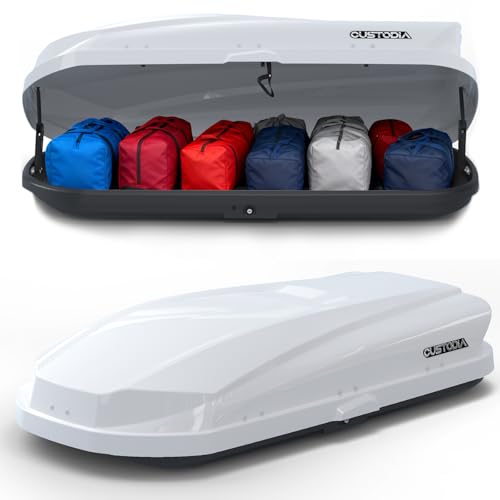
- 【Hard Shell Construction】The Pidock roof cargo carrier offers a durable and secure storage solution for your travels. With its robust hard shell construction, it protects your
- 【Ample Storage Capacity】Measuring 62.5 (L) x 32.48 (W) x 13.19 (H) inches, this cargo box provides 14 cubic feet of storage space, allowing you to bring along all your essentials
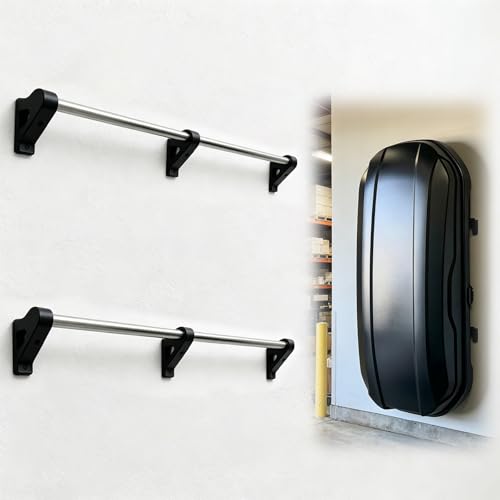
- 【Maximize Garage Space】 Reclaim valuable floor space with this low-profile, heavy-duty wall mount system designed to securely store your bulky roof cargo box. Keep your car top
- 【Perfect Fit】Engineered for versatility, this unique mount kit allows the hardwood dowels to dictate the exact width, ensuring a perfect fit regardless of your garage's stud
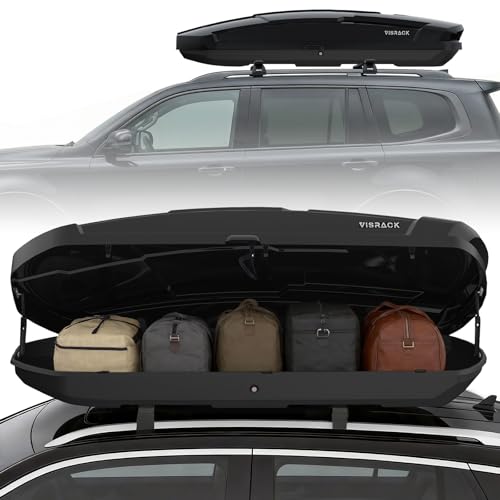
- Boasting a massive 26 cubic feet of storage space and a 150 lbs load capacity, this rooftop box provides ample room for luggage, camping gear, and sports equipment
- Crafted from high-grade ABS+PC composite material, this cargo box is rugged, impact-resistant, and built to withstand harsh weather. Its shiny finish ensures long-lasting
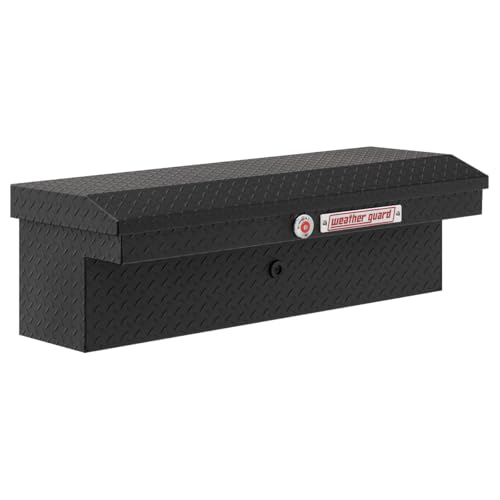
- Improved high security locking system provides unmatched protection
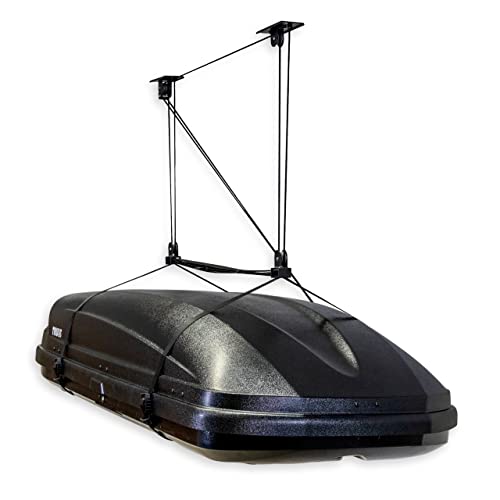
- MAXIMIZE GARAGE STORAGE & ORGANIZATION – Free up valuable floor space by lifting your cargo box overhead with this heavy-duty pulley system for garage use. Perfect for organizing
- COMPLETE GARAGE STORAGE SYSTEM – Includes heavy-duty pulleys, mounting hardware, adjustable loading straps, and center connecting strap to secure your cargo box or rooftop
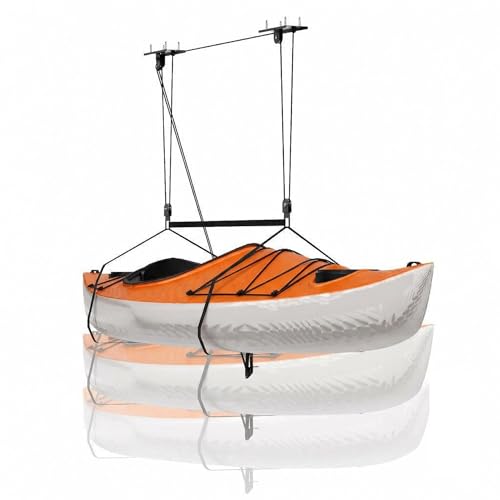
- Reclaim your garage with a smart overhead solution. This Cargo Box Garage Pulley System works with Ceiling Mounted Storage Racks to lift large cargo boxes, bins, and outdoor gear
- Built with heavy‑duty steel brackets and a rugged rope system, this Cargo
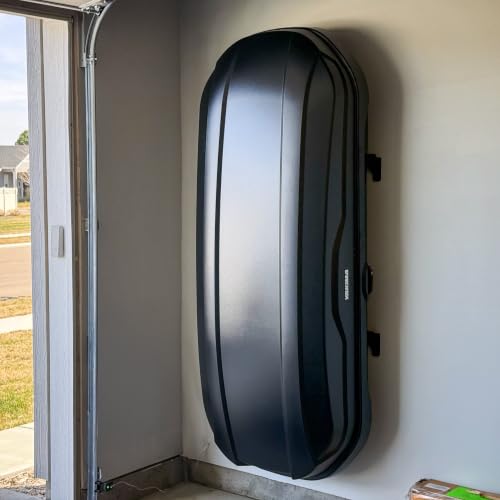
- IMPORTANT: What You Need to Provide: To complete this setup and customize it to your specific garage stud spacing, you must purchase two 3/4" (.75") HARDWOOD dowels (such as
- Customizable Width: Because garage stud spacing varies, this kit allows you to dictate the exact width of your mount by supplying your own dowel
What to Look For in a Low-Profile Roof Box
Start with the number that actually decides it. A roof box's own height is only one term in the equation — the figure you need is the manufacturer-defined installed height of the complete approved setup, measured on your own vehicle with the rack and box fitted, checked against every door and route clearance you have to pass. A 13-inch box on a crossover that already stands 5 feet 8 inches at the roofline is not a 13-inch problem, and a published shell height alone does not establish installed clearance.
Here is the ranked list of what matters when a ceiling or a height bar is the binding constraint:
- A published height dimension. Marketing calls a lot of things low profile. Only one supplied roof box states a height numerically, and its own record disagrees with itself: for the Hard Shell Roof Cargo Carrier White with Security Keys (B0D1KMBYRC), the detailed bullet gives 62.5 (L) x 32.48 (W) x 13.19 (H) inches while the verified product title gives 63 (L) x 33 (W) x 14 (H) inches [S6], so neither height is a confirmed figure to plan clearance around until the manufacturer confirms the authoritative dimensions. The INNO boxes are described as low profile in their titles [S3][S4] but the supplied listing information does not state a height in inches for either — you would need to confirm that with the manufacturer before you commit.
- Capacity you can live with. Stated volume does not tell you exterior height, what objects will actually fit, or the mounting envelope. Nine cubic feet [S4] is a different proposition than 26 cubic feet [S10], and the supplied listing for the 26 cu ft carrier (B0GS8WD594) does not state an external height, so you cannot plan it against a clearance limit.
- Fore-aft adjustability. Rear hatch strike is another way a box fails to fit, independent of height. INNO's listings emphasize this specifically: the WEDGE660's track design is described as simple to adjust forward or back for hatch clearance [S3], and the ROOF Box 320 claims the widest range to slide front for minimal risk of contact with the hatch [S4].
- Opening side. Dual-side opening matters more in a narrow garage than on the road, because you may only have room to stand on one side. The WEDGE660 [S3], the ROOF Box 320 [S4], and the 26 cu ft carrier [S10] all list dual-side opening.
- A plan for the other ten months. This is the part shoppers skip. If your garage ceiling is low enough to worry about clearance while driving in, it is low enough to make an empty roof box genuinely awkward to store.
Nothing in the supplied evidence establishes which agency handles safety recalls for roof racks or cargo boxes; USA.gov's consumer protection resources [S1][S2] can help you find the right agency.
Hard Shell Roof Cargo Carrier White with Security Keys — Best for Shoppers Comparing Published Dimensions
Look, if you are reading a page about garage clearance, you need a dimension, not an adjective. This is the only roof box in the supplied set whose listing publishes one. For the Hard Shell Roof Cargo Carrier White with Security Keys (B0D1KMBYRC), the detailed bullet gives 62.5 (L) x 32.48 (W) x 13.19 (H) inches while the verified product title gives 63 (L) x 33 (W) x 14 (H) inches [S6], so the two published height figures disagree.
The supplied record for the Hard Shell Roof Cargo Carrier White with Security Keys (B0D1KMBYRC) contradicts itself on the height that matters for clearance: the detailed bullet gives 13.19 inches while the verified product title gives 14 inches [S6]. Because the two disagree, neither figure can be treated as a confirmed number to add to your roofline — obtain the authoritative dimensions from the manufacturer and measure the actual installed clearance of the assembled setup on your vehicle before planning against any limit.
The rest reads as conventional for the category. Hard shell construction for weather and theft resistance, tool-free installation onto a roof rack, and included security keys [S6]. The supplied listing does not state a load capacity, a shell material, or crossbar spacing requirements, so you should verify fitment against your specific rack before ordering.
Pros
- Publishes height figures, though the bullet's 13.19 inches and the title's 14 inches disagree [S6]
- 14 cubic feet of stated capacity in that footprint [S6]
- Tool-free installation onto a roof rack [S6]
- Includes security keys for lockable storage [S6]
- The title's 14-inch height and the bullet's 13.19-inch height disagree slightly [S6]
- The supplied listing does not state a weight capacity or which crossbar profiles it fits
INNO WEDGE660 White 11 cu ft — Best for Hatchbacks and Tight Rear Clearance
Height is not the only way a roof box fails to fit. The other failure is the tailgate that swings up into the back of the box, and the WEDGE660's listing addresses that head-on: the new track design is described as making it simple to adjust the box forward or back for hatch clearance, while also providing a better seal against weather [S3]. The supplied listing does not state the adjustment range or the installed envelope, so it does not establish fit on any particular hatchback or wagon — confirm complete vehicle, rack and mount fit and the resulting clearance with the manufacturers before ordering.
Capacity is 11 cubic feet per the product record [S3], which sits between the ROOF Box 320's 9 cubic feet [S4] and the Pidock carrier's 14 [S6]. It fits Aero, square, round, and most factory racks [S3], which is a broad compatibility claim and useful if you are working with whatever bars came on the car.
Two details stand out. INNO states that the safety lock allows you to pull the keys out once the box has been closed all the way [S3]. That describes when the keys can be released; the supplied listing does not establish that the keys are held captive or that the design prevents driving with an unlatched lid, so check the lid and latches yourself every time before you drive. And INNO lists a limited lifetime warranty for the INNO WEDGE660 White 11 cu ft (B078ZSBHNC) [S3].
Here's the honest limitation: the title calls it low profile [S3], but the supplied listing information does not state a height in inches. For a page about clearance, that is a real gap. If you are within a couple of inches of a hard limit, confirm the height with INNO directly before ordering.
Pros
- Track design specifically intended to let you slide the box clear of a rear hatch [S3]
- Fits Aero, square, round, and most factory racks [S3]
- Safety lock allows the keys to be pulled out once the box has been closed all the way, per INNO [S3]
- Limited lifetime warranty per the listing [S3]
- Dual side opening for loading from either side [S3]
- The supplied listing information does not state a height in inches, despite the low-profile description [S3]
- No stated load capacity in the supplied record
INNO ROOF Box 320 Matte Black 9cu ft — Best for the Smallest Supplied Roof-Box Capacity
Nine cubic feet [S4] is the smallest stated capacity among the roof boxes here. The supplied listing for the INNO ROOF Box 320 Matte Black 9cu ft (B084BJSXQ1) does not state a height, length, or width, so its smaller volume does not establish that it stands lower under a garage ceiling than any other box here. INNO describes it as compact but carrying more with a square design [S4]; that is the seller's description, and the supplied listing gives no dimensions or comparison to establish what the shape achieves relative to any other box here.
The fit story is the strongest part of the listing. INNO claims the widest range to slide front for minimal risk of contact with the hatch [S4], which is a comparative claim from the seller rather than an independently verified one — but the underlying design intent is clear enough. It also lists a Memory Mount System, which INNO describes as the easiest installation and use of any cargo box on the market [S4]. Treat that superlative as marketing; the supplied listing for the INNO ROOF Box 320 Matte Black 9cu ft (B084BJSXQ1) presents the Memory Mount System as serving ease of installation and use, without detailing how it works, so confirm with INNO if seasonal removal and reinstallation is part of your plan.
Security and coverage match its stablemate: a safety key lock system [S4] and a limited lifetime warranty [S4]. The listing describes a rugged matte black finish [S4], which is a cosmetic choice; nothing in the supplied facts establishes how it performs against marks or wear compared with any other finish.
Same gap as the WEDGE660, and it needs saying plainly: the supplied listing does not state a height in inches [S4]. Low profile is in the title, not in a dimension you can add to your roofline.
Pros
- 9 cu ft is the smallest stated roof-box capacity in this set [S4]
- INNO describes the INNO ROOF Box 320 Matte Black 9cu ft (B084BJSXQ1) as having the widest range to slide front for minimal risk of contact with the hatch; the supplied listing states no adjustment range and no comparison basis [S4]
- Memory Mount System, which the listing presents as serving ease of installation and use [S4]
- Dual side opening and a safety key lock system [S4]
- Limited lifetime warranty [S4]
- No height dimension in the supplied listing information [S4]
- 9 cu ft [S4] is well under the 14 cu ft of the Pidock carrier [S6] — a real capacity sacrifice
Hard Shell Roof Cargo Box, 26 Cu Ft Extra Large Rooftop Carrier — Best for Maximum Capacity When Clearance Is Not the Limit
Honesty first: this box cannot be planned against a height limit, and it is in this roundup as the counterexample. Twenty-six cubic feet [S10] is nearly three times the ROOF Box 320's 9 cubic feet [S4] and roughly 1.9 times the Pidock carrier's 14 [S6]. The supplied listing for the Hard Shell Roof Cargo Box, 26 Cu Ft Extra Large Rooftop Carrier (B0GS8WD594) publishes capacity, load rating and lid opening, but no external height.
If your height limit is generous — a detached garage with a tall door, or street parking with no structure to clear — the specification list is strong. High-grade ABS+PC composite construction, rated to hold up to 150 lbs, with tool-free brackets engineered to fit most factory and aftermarket racks including round, square, and aerodynamic bars [S10]. The listing states that the keys can only be removed when all locking points are fully secured [S10]. INNO separately states that its safety lock allows the keys to be pulled out once the box has been closed all the way [S3]. Neither statement establishes that a lid cannot be driven with unlatched, so check the closure yourself before every trip.
One number in this listing is easy to misread. The lid is described as opening wide at 13.4 inches [S10] — that is the lid opening, not the height of the box. The supplied listing does not state the box's own external height, so do not treat 13.4 inches as a clearance figure. What it does tell you is that dual-side opening [S10] gives you real access from either side, which is useful in a one-car bay where you can only reach one flank of the vehicle.
Pros
- 26 cubic feet, the largest stated capacity in this set [S10]
- 150 lb stated load capacity [S10]
- ABS+PC composite shell described as built to withstand harsh weather, with a finish the listing says protects valuables from rain, snow, dust, and UV rays [S10]
- Fits round, square, and aerodynamic bars, tool-free [S10]
- Keys release only when all locking points are secured [S10]
- The supplied listing does not state an external height, so there is no figure to add to your roofline [S10]
- At 150 lbs loaded [S10] it will also test your vehicle's roof rating, which the listing does not address
Weather Guard Model 180-52-04 41in Low Profile Lo-Side Box — Not Established as a Roof-Mounted Option
This one is not established as a roof box, and the supplied record for it is unusually thin, so read it carefully before you buy. What the record does establish: the Weather Guard Model 180-52-04 41in Low Profile Lo-Side Box (B0FDY8BNJG) is a 41-inch low-profile Lo-Side box in aluminum with a textured matte black finish and 3.0 cubic feet of capacity [S7]. Its supplied listing does not state roof-rack mounting, crossbar compatibility, or vehicle-roof fitment, so nothing in the supplied evidence establishes it as a roof-mounted option. That is the whole dimensional picture the listing gives.
The volume is the headline tradeoff. Three cubic feet [S7] is a third of the ROOF Box 320's 9 cubic feet [S4], so this is tool-and-gear storage, not family-vacation luggage. The supplied listing states aluminum construction with a textured matte black finish [S7]; it does not state a weight, a load rating, or any corrosion performance, so nothing here establishes how it compares with a steel box.
Here is the gap that matters most on a page about clearance. The supplied listing states one feature — an improved high security locking system described as providing unmatched protection [S7] — and that superlative is the seller's language, not an independent finding. It does not state where or how the box mounts, which vehicles it fits, what mounting hardware is included, or whether it mounts on a roof rack at all. Weather Guard may publish that information elsewhere; it simply is not in the supplied record. Confirm mounting method and fitment with the manufacturer before ordering, because none of the height arithmetic in this article can be done for this product from the evidence available.
Pros
- Aluminum construction with a textured matte black finish [S7]
- Improved high security locking system per the listing [S7]
- 41-inch low-profile format at 3.0 cubic feet [S7]
- 3.0 cu ft [S7] is by far the smallest capacity here — a third of the ROOF Box 320's 9 cu ft [S4]
- The supplied listing states only one feature; mounting method, vehicle fitment, and weight are not provided
- No height or clearance figure in the supplied record, so it cannot be planned against a garage limit
- The supplied listing does not state roof-rack mounting or crossbar compatibility, so it is not established as a roof-mounted option
RoakyRoasy Cargo Box Hoist for Garage Ceiling with Metal Pulley System — Best for Off-Season Overhead Storage
Here's the thing about a low garage: the box has to live somewhere when it is off the car, and leaning it against a wall costs you a parking space. This hoist publishes one figure about its raised position that the others do not state — but that figure describes the lift, not the clearance a hanging box leaves you.
RoakyRoasy states that when fully raised, the lift sits just 5.5 inches from the ceiling [S8]. That figure describes the lift itself when fully raised; the supplied listing for the RoakyRoasy Cargo Box Hoist for Garage Ceiling with Metal Pulley System (B0FLVHP4P6) does not state how far below the ceiling a strapped box actually hangs, so it does not support headroom arithmetic for parking a car underneath. The other supplied hoist listings do not state a comparable figure, which is silence rather than evidence that they hang lower or higher. Confirm the actual loaded geometry with RoakyRoasy, or measure the assembled setup, before planning against a tight clearance.
Construction is described as heavy-duty 11-gauge steel with all-metal pulleys, supporting up to 150 lbs, using 5/16-inch double-braided polyester ropes and all-metal buckles [S8]. It provides a 2:1 mechanical advantage, which the listing says cuts the lifting effort in half, plus a locking mechanism that grips the rope to prevent slipping [S8]. RoakyRoasy states that ratio; the supplied facts do not establish that any given person can safely raise or lower a particular box with it. Follow the manufacturer's approved handling procedure, and get help rather than lifting a large box overhead on your own.
It mounts parallel or perpendicular to joists via dual-direction mounting holes and includes heavy-duty lag screws [S8], and it is designed for 8 to 10 foot garage ceilings [S8]. The supplied listing cannot establish that your ceiling structure will carry the load, so have the mounting structure approved and confirm the hoist, anchor and box limits before hanging anything.
Pros
- Listing states the lift sits 5.5 inches from the ceiling when fully raised [S8]
- 11-gauge steel with all-metal pulleys and buckles [S8]
- 2:1 mechanical advantage halves the lifting effort per the listing [S8]
- Rope-gripping lock guards against accidental slipping [S8]
- Parallel or perpendicular joist mounting, lag screws included [S8]
- The 5.5 in figure describes the lift when fully raised, not how far below the ceiling a strapped box hangs, so the supplied listing gives no headroom figure to plan with under a low ceiling [S8]
- Requires drilling into ceiling joists, whose own capacity the listing cannot establish
StoreYourBoard Cargo Box Pulley System — Best for Buyers Who Want the Listed Straps and Connector Named Up Front
StoreYourBoard's hoist covers the same job. The listing states that the kit includes heavy-duty pulleys, mounting hardware, adjustable loading straps, and a center connecting strap to secure your cargo box or rooftop carrier [S5]. The RoakyRoasy listing separately states adjustable straps of its own [S8], so the presence of straps here does not distinguish the two; neither listing states a complete kit inventory. The supplied facts do not describe how any particular load behaves on a two-point lift or what restraint it needs, so follow the manufacturer's approved storage and hoisting instructions for your box rather than assuming the included straps make any given setup complete.
It is built from solid alloy steel and premium rope, supports up to 150 lbs, and installs parallel or perpendicular to joists [S5]. The design targets 8 to 10 foot garage ceilings [S5], the same range as the RoakyRoasy unit [S8]. The listing also states that the system is designed in the USA by the StoreYourBoard team [S5] — a seller's description of its own operation, not something this website confirmed.
What is missing matters for this page. The supplied listing does not state how close to the ceiling the box sits when fully raised. In a garage where the difference between fitting and not fitting is a few inches, that unknown is the one you would want answered before buying — and no supplied hoist listing, RoakyRoasy's included, states how far below the ceiling a strapped box hangs. That is not evidence this unit hangs lower; it is simply not stated in the supplied listing.
Pros
- Listing states the kit includes pulleys, mounting hardware, adjustable loading straps, and a center connecting strap [S5]; it does not state a full kit inventory, so confirm what else your load needs
- Solid alloy steel construction with premium rope [S5]
- Supports up to 150 lbs [S5]
- Installs parallel or perpendicular to joists [S5]
- The supplied listing does not state the raised clearance from the ceiling
- Designed for 8 to 10 ft ceilings [S5], so taller or shorter garages need a different solution
Cargo Box Garage Pulley System, Heavy-Duty Overhead Hoist — Best for Mixed Overhead Loads Beyond the Roof Box
This hoist is pitched more broadly than the other two. The listing repeatedly frames it as working alongside ceiling mounted storage racks to lift cargo boxes, bins, and outdoor gear [S9], with adjustable straps that grip various sizes of cargo boxes and odd-shaped items [S9]. If your overhead zone is going to hold a roof box in winter and bins the rest of the year, that flexibility is the argument.
The specifications track the category. Heavy-duty steel brackets with a rugged rope system rated to 150 lbs [S9], designed for garages with 8 to 10 foot ceilings [S9], and a mechanical advantage design that the listing says reduces lifting effort [S9]. The title also describes a dual fixed-point design [S9], but the supplied listing does not say what that design consists of or what it does for stability, and the only "stays level, stable" language in the bullets is attributed to separately supplied ceiling mounted storage racks providing the anchor point [S9].
The caveats are about what is not stated. The supplied listing does not give a raised clearance from the ceiling, a rope diameter, a steel gauge, or a specific mechanical advantage ratio — all figures the RoakyRoasy listing does provide [S8]. Read that as less published detail, not as worse hardware. And note that several bullets describe pairing it with ceiling mounted storage racks [S9]; the supplied listing does not state what the kit contains, so confirm with the seller whether any rack is included before planning that setup.
Pros
- Adjustable straps grip various cargo box sizes and odd-shaped items [S9]
- Heavy-duty steel brackets rated to 150 lbs [S9]
- Dual fixed-point design named in the product title [S9]
- Mechanical advantage design reduces lifting effort [S9]
- No raised ceiling clearance, rope diameter, or steel gauge in the supplied listing
- Several bullets describe use with ceiling mounted storage racks [S9], but the supplied listing does not state what the kit includes
Roof Box Wall Mount Compatible with Yakima Thule & Most Car Top Carriers — Best for Garages Where the Ceiling Is Unusable
Sometimes the ceiling is simply off the table — a finished garage, a low-slung roof, an opener rail straight down the middle. This wall mount moves the problem sideways. The listing describes a low-profile, heavy-duty wall mount system that keeps the box tucked against the wall, protected from scratches until the next trip [S11].
The clever part is the mounting method. The listing describes a simulated crossbar for your cargo box's own built-in mounting clamps to grab onto, leveraging the box's inherent locking mechanism [S11]. That is the seller's description of the mounting concept; it does not establish that the result is equivalent to a vehicle installation or that no additional support or restraint is needed, so confirm manufacturer-approved storage fit, supports, hardware and load requirements for your specific box before hanging it. A wall mount also adds attachment points a vehicle crossbar does not have — the stud fixings, the brackets, and the dowels — and the supplied listing for the Roof Box Wall Mount Compatible with Yakima Thule & Most Car Top Carriers (B0GZ325VSH) does not state a weight capacity, a bracket rating, or a dowel specification, so inspect those points and confirm ratings with the seller.
Width is user-determined: hardwood dowels dictate the exact span so it fits regardless of your garage's stud spacing [S11]. Read the safety note carefully — the listing states brackets must be drilled directly into wooden wall studs for maximum safety and load capacity [S11]. That is a hard requirement, not a suggestion: the listing approves wooden wall studs only, and nothing in the supplied facts approves a masonry or drywall-only installation.
Pros
- Uses your cargo box's own clamps and locking mechanism for the hold [S11]
- Hardwood dowels dictate the exact width, which the listing says gives a fit regardless of your garage's stud spacing; the supplied listing states no dowel diameter, length limit, or span rating [S11]
- Six brackets plus screws and screw plates included for standard wood stud installation; the listing states brackets must be drilled directly into wooden wall studs, and no dowel specification is given [S11]
- Keeps the box tucked flat against the wall and free from scratches [S11]
- Brackets must go directly into wooden wall studs [S11]; no other wall type is approved in the supplied listing
- The supplied listing does not state a weight capacity or a required dowel diameter for this kit
Roof Box Wall Mount KIT for Yakima, Thule — Best for Buyers Willing to Source Their Own Dowels
Same idea, more explicit about what you are buying. This kit leads with a warning: you must purchase two 3/4-inch hardwood dowels — oak, maple, or birch are named — cut to your required length [S12]. That is unusually direct labeling, and it means you should plan a second purchase and a saw before the rack is usable.
The rationale is the same customizable-width logic: because garage stud spacing varies, supplying your own dowel lets you dictate the exact width of the mount [S12]. And like its counterpart, the listing describes a simulated crossbar for your cargo box's existing locking mechanism to grab [S12], with a low-profile design that keeps the box tucked tightly against the wall [S12]. As with the other kit, that describes the mounting concept rather than establishing approved fit — confirm the storage fit, supports, hardware and load requirements for your specific box, along with the exact installation instructions, before mounting.
The construction difference is the one to weigh. This kit is described as heavy-duty 3D printed construction using high-strength durable polymers designed to withstand the weight of heavy, awkward cargo boxes [S12] — where the other wall mount listing describes robust wall mount brackets built for load distribution without naming a material or process [S11]. Neither listing states a weight capacity in pounds, so you cannot compare the two numerically on strength. What you can compare is disclosure: this one tells you exactly what it is made of and exactly what you have to buy separately.
Pros
- States the dowel requirement plainly up front: two 3/4-inch hardwood dowels, oak, maple, or birch [S12]
- Width fully customizable to your stud spacing [S12]
- Works with your cargo box's factory clamps and locking mechanism [S12]
- Low-profile design keeps the box tight to the wall [S12]
- Requires a separate dowel purchase and cutting before it is usable [S12]
- 3D printed polymer construction [S12] with no stated weight capacity to compare against alternatives
Head-to-Head: Capacity and Published Clearance Figures
| Product | Stated Capacity | Height or Clearance Figure Published | Locking |
|---|---|---|---|
| Hard Shell Roof Cargo Carrier White with Security Keys | 14 cu ft [S6] | Height published but inconsistent — 13.19 in in the bullet, 14 in in the title [S6] | Security keys included [S6] |
| INNO WEDGE660 White 11 cu ft | 11 cu ft [S3] | Not stated in the supplied listing | Safety lock; keys can be pulled out once closed all the way [S3] |
| INNO ROOF Box 320 Matte Black 9cu ft | 9 cu ft [S4] | Not stated in the supplied listing | Safety key lock system [S4] |
| Hard Shell Roof Cargo Box | 26 cu ft [S10] | Lid opens 13.4 in; box height not stated [S10] | Central locking; keys removable only when all points secured [S10] |
| Weather Guard Model 180-52-04 41in Low Profile Lo-Side Box — not established as roof-mounted; listed here for reference only | 3.0 cu ft [S7] | 41 in long; no height figure stated, and no roof-rack fitment stated | High security locking system [S7] |
How We Research
Every figure on this page traces to two source types and nothing else: the Amazon Creators API verified product record for each ASIN, and the individual product listing feature bullets, all retrieved on September 6, 2026.
The work is close reading, not handling. We compare stated capacities against each other arithmetically, flag where a title and a detail bullet disagree, separate seller superlatives from checkable specifications, and say explicitly when a listing does not publish something a garage-clearance shopper needs. Where a manufacturer describes its own product — INNO's hatch-clearance track [S3], RoakyRoasy's statement that its lift sits 5.5 inches from the ceiling when fully raised [S8] — that attribution stays attached to the claim.
Nobody at this website installed, lifted, loaded, or drove with any of these products. When a spec is absent from the supplied record, we treat it as unknown rather than as zero, and we tell you to verify it with the manufacturer.
Recommendations by Use Case
If you want a roof box with published dimensions: the Hard Shell Roof Cargo Carrier White with Security Keys. Its listing publishes 62.5 x 32.48 x 13.19 inches with 14 cubic feet of capacity, while its verified title gives 63 x 33 x 14 inches [S6] — the two disagree, so confirm the height with the manufacturer before using it for clearance math.
If your fit problem is a rear hatch, not a ceiling: the INNO WEDGE660 White 11 cu ft, whose track design is described as simple to adjust forward or back for hatch clearance, with a limited lifetime warranty [S3]. The supplied listing states neither the adjustment range nor an installed height, so confirm complete vehicle, rack and mount fit and the resulting clearance with the manufacturers.
If you want the least box possible: the INNO ROOF Box 320 Matte Black 9cu ft at 9 cubic feet [S4], the smallest roof-box capacity supplied, with a Memory Mount System that the listing presents as serving ease of installation and use [S4].
Not recommended for a roof-clearance decision: the Weather Guard Model 180-52-04 41in Low Profile Lo-Side Box is a 41-inch aluminum box with 3.0 cubic feet [S7], but its supplied listing does not state a mounting method, roof-rack compatibility, or vehicle fitment, so it is not established as a roof-mounted option and is listed here for reference only.
If the ceiling is your storage plan: the RoakyRoasy Cargo Box Hoist for Garage Ceiling with Metal Pulley System, whose listing states that the lift sits 5.5 inches from the ceiling when fully raised, with a 2:1 mechanical advantage [S8]. It does not state how far below the ceiling a strapped box hangs, so confirm the actual loaded geometry, have the mounting structure approved, and check the hoist, anchor and box limits before relying on the remaining headroom.
If you want the straps and connector named in the listing: the StoreYourBoard Cargo Box Pulley System, whose listing states it includes pulleys, mounting hardware, adjustable loading straps, and a center connecting strap [S5]. That is not a stated full kit inventory, so follow the manufacturer's approved storage and hoisting instructions and confirm any further securing equipment your load requires.
If the wall is your only option: the Roof Box Wall Mount Compatible with Yakima Thule & Most Car Top Carriers, a six-bracket kit the listing says must be drilled into wooden wall studs and that works with your box's own clamps [S11]. Confirm the structure, the unstated bracket and dowel ratings, and your box's compatibility and installation requirements first.
Final Verdict
For a shopper whose garage or parking structure imposes a hard height limit, the Hard Shell Roof Cargo Carrier White with Security Keys is the most defensible roof box here, for one reason: its listing at least publishes height figures, though they disagree — 13.19 inches in the detailed bullet against 14 inches in the verified product title [S6] — a conflict to resolve with the manufacturer before you rely on either number. Every other roof box in this set may well be low profile — INNO says so in both titles [S3][S4] — but the supplied listings do not give you the number, and a clearance decision made on an adjective is a decision you make twice.
Pair it with the RoakyRoasy Cargo Box Hoist for Garage Ceiling with Metal Pulley System, which states that it sits 5.5 inches from the ceiling when fully raised [S8]. That figure describes the lift itself, not how far below the ceiling a strapped box hangs, so the overhead half of the problem still needs measurement of the actual loaded setup, structural approval for the mounting, and confirmation of the hoist, anchor and box limits before you can rely on it.
If you want more on rack setup and seasonal storage, see our guides to roof rack crossbar fitment and garage overhead storage planning.
Frequently Asked Questions
What roof box height fits in a standard low garage?
There is no single answer, because the box height is only one term. What you need is the manufacturer-defined installed height of the complete approved setup — vehicle, rack and box together — measured on your own vehicle and checked against your door opening and every clearance on your route. Published shell dimensions alone are not enough. Among the supplied products, the only roof box with a published height is the Hard Shell Roof Cargo Carrier White with Security Keys, and its record is inconsistent: 13.19 inches in the detailed bullet against 14 inches in the product title, with 14 cubic feet of capacity [S6]. Obtain the authoritative dimensions from the manufacturer and measure the installed clearance before planning against it.
Is a slim rooftop cargo box under 14 inches realistic?
The supplied record does not settle it. The Pidock carrier's detailed bullet gives 62.5 (L) x 32.48 (W) x 13.19 (H) inches while its verified title gives 63 (L) x 33 (W) x 14 (H) inches [S6] — the two disagree, so treat the height as unconfirmed, obtain authoritative dimensions from the manufacturer, and measure the actual installed clearance of the assembled setup before relying on any figure.
Do the INNO boxes state their height?
No. Both the INNO WEDGE660 and the INNO ROOF Box 320 are described as low profile in their titles [S3][S4], but the supplied listing information does not state a height in inches for either. That is a gap in the supplied record, not proof INNO never publishes the figure — check with the manufacturer if you are close to a limit.
How much ceiling space does a cargo box hoist take up?
Only one supplied hoist states a related figure: RoakyRoasy says its lift sits just 5.5 inches from the ceiling when fully raised [S8]. That describes the lift itself, not how far below the ceiling a strapped box hangs, so the supplied listings do not give you a headroom figure — measure your own assembled setup or ask the manufacturer. The StoreYourBoard [S5] and Cargo Box Garage Pulley System [S9] listings do not state a raised clearance figure.
How much weight can these garage hoists lift?
All three supplied hoists state a 150 lb capacity — StoreYourBoard [S5], RoakyRoasy [S8], and the Cargo Box Garage Pulley System [S9]. All three are also designed for 8 to 10 foot garage ceilings [S5][S8][S9]. Those ratings describe the hardware only; your ceiling joists have separate limits that no product listing can establish for your house.
What if I cannot use my garage ceiling for storage?
Wall mounting is the alternative. Both supplied wall mount kits provide a simulated crossbar so your box's own factory clamps do the gripping [S11][S12], and both let hardwood dowels set the width to match your stud spacing [S11][S12]. The bracket kit's listing is explicit that brackets must be drilled directly into wooden wall studs for maximum safety and load capacity [S11].
Does a 150 lb box capacity mean my car roof can carry 150 lbs?
No, and this is the most important thing to get right. The 26 cu ft carrier is rated to hold up to 150 lbs [S10], but that is the box's own capacity. Follow the limits published by your vehicle manufacturer, by your rack or mount manufacturer, and by the carrier itself, each as that manufacturer defines it — the definitions differ, and a box's own 150 lb rating is not comparable to a vehicle or rack limit. Include equipment and cargo weights wherever a limit requires it. The supplied listings do not state an empty weight for any box or rack, and several state no carrier rating at all, so obtain the absent weights and limits from the manufacturers before loading.
Sources & Methodology
Nothing on this page was physically or laboratory-tested by this website, and no one here mounted a box on a car or bolted a hoist to a joist. What we did instead was read each product's Amazon Creators API verified product record and its full set of listing feature bullets, retrieved September 6, 2026, and pull out the specific figures a height-constrained buyer needs — published box dimensions, stated capacities, hoist ceiling clearances, load ratings, and mounting requirements — while flagging every place a listing stays silent.
For a clearance decision, that narrows the shortlist, but it does not settle it: a published shell height is not the installed height of a complete approved setup, so the deciding figure has to come from the manufacturers and from measuring the assembled vehicle, rack and box against your own door and route clearances. What close reading cannot tell you is long-term durability, real-world wind noise, or how a latch feels after three winters. For those, seek out owner feedback and the manufacturers' own documentation before you commit.