As an Amazon Associate this site earns from qualifying purchases.
Quick Picks
| Model | Stated capacity | Standout published detail | Link |
|---|---|---|---|
| INNO WEDGE660 White 11 cu ft | 11 cu ft, per the listing title | Limited lifetime warranty; track adjusts fore/aft for hatch clearance | Check Price on Amazon |
| Thule Motion 3 XXL Roof Box with GoPack Duffel Set Bundle - Spacious Cargo Storage Solution | Not stated in the supplied listing | SlideLock lid indication plus PowerClick torque indicator | Check Price on Amazon |
| Thule Motion 3 XXL Low Roof Box with GoPack Duffel Set Bundle - Spacious Car Storage Solution | Not stated in the supplied listing | Same SlideLock and PowerClick systems in the "Low" body style | Check Price on Amazon |
| Hard Shell Roof Cargo Box | 26 cu ft, 150 lbs load capacity | Dual-side opening; listing says the lid "opens wide (13.4 inches)" and stays put on support arms | Check Price on Amazon |
Disclosure: We earn a small commission from qualifying Amazon purchases at no extra cost to you.
As an Amazon Associate, we earn from qualifying purchases.Last Updated: September 2026
Look, the question "are expensive roof boxes worth it" is really two questions wearing one coat. The first is whether specialist-brand boxes are engineered differently from value-brand boxes. The second is whether you — with your car, your garage height and your two road trips a year — will ever collect on that difference.
This guide separates them, and it does it the only honest way available: by reading what each manufacturer actually publishes on its own Amazon listing and asking what those published details mean once the box is bolted to a moving roof.
One ground rule up front. Prices in this category move with season, stock and bundling, so nothing here is ranked by cost and no dollar figures are quoted. Check the current price on Amazon for each model, then come back and ask whether the published feature list justifies whatever gap you are looking at.
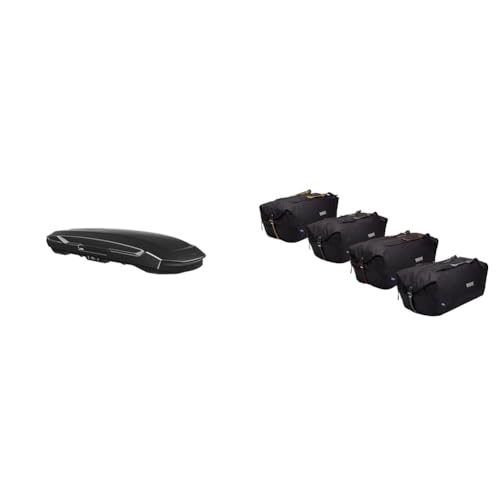
- SlideLock system with separate locking and opening functions automatically locks the lid in place and indicates when the roof box is closed securely
- PowerClick quick-mount system features an integrated torque indicator that "clicks" when properly mounted, ensuring fast and secure fitting
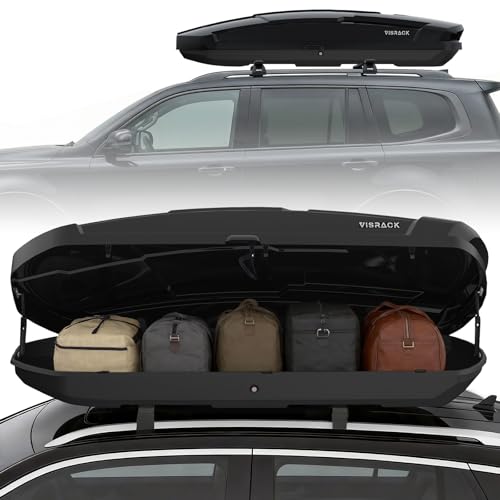
- Boasting a massive 26 cubic feet of storage space and a 150 lbs load capacity, this rooftop box provides ample room for luggage, camping gear, and sports equipment
- Crafted from high-grade ABS+PC composite material, this cargo box is rugged, impact-resistant, and built to withstand harsh weather. Its shiny finish ensures long-lasting
The Short Answer
Roof boxes in this group differ in three places you can check on the listing: the mounting interface, the closing and locking mechanism, and the shell's shape. Stated capacity is a separate published number, and no supplied listing states a price or a manufacturing cost, so nothing here establishes a cost ranking between these models.
So the practical test is simple. Check which listing publishes a mount with a torque indicator, which publishes a lid that indicates closure, and which states a warranty term, then compare those published features against the current prices you actually see. None of these features removes the need to follow the manufacturer's full fit, install and closure procedure, and a stated warranty term is not a statement about service life.
What this guide covers:
- The real categories of hard-shell roof box, and which body style each suits
- The features that matter, ranked — mount, lock, opening side, hatch clearance, shell, warranty
- The mistakes that turn a fine box into a bad purchase
- How to think about budget when published prices are moving targets
- Four specific boxes with their published specifications laid out side by side
Types of Roof Boxes Explained
A hard-shell roof box is a rigid, lockable enclosure that clamps to your crossbars and carries luggage outside the cabin. Within that definition, the meaningful split is not brand — it is body profile and how the box is meant to be lived with.
Low-profile boxes trade height for clearance. They are the answer when your garage, your parking structure or your hatch swing is the binding constraint rather than volume.
Full-size touring boxes prioritise long-item capacity and are usually shaped around a drag argument, with a tapered nose and a wing-like cross-section.
Extra-large boxes chase the capacity number. They are the right call for one big family relocation or a gear-heavy camping season, provided you have the roof rating and the crossbar spread to support them.
Bundled systems pair the box with fitted duffels so the box loads and unloads as modules rather than as a loose pile.
| Type | What defines it | Best suited to | Example in this guide |
|---|---|---|---|
| Low-profile hard shell | Listing title describes a low-profile hard shell; no installed height supplied | Buyers who will confirm full installed dimensions and approved fit against their own height limit | INNO WEDGE660 White 11 cu ft |
| Full-size aerodynamic touring box | Wing-shaped profile, forward-leaning nose | Buyers who want the published SlideLock, PowerClick and bundled-duffel features, and who will confirm full installed dimensions and approved fit | Thule Motion 3 XXL Roof Box with GoPack Duffel Set Bundle - Spacious Cargo Storage Solution |
| Low-body variant of a touring box | Same mount and lock systems, low-body listing; no heights supplied | Buyers who will obtain full installed dimensions and approved fit before choosing | Thule Motion 3 XXL Low Roof Box with GoPack Duffel Set Bundle - Spacious Car Storage Solution |
| Extra-large hard shell | Large stated volume, composite shell | Single big moves, bulky camping loads | Hard Shell Roof Cargo Box |
For a wider spread of models across body styles, see our best rooftop cargo boxes roundup.
Key Features to Look For, Ranked by Importance
1. The mounting system, and whether it confirms itself
This is where the published feature sets differ most clearly. Thule's listing for the Motion 3 XXL describes a PowerClick quick-mount system with an integrated torque indicator that clicks when properly mounted, ensuring fast and secure installation. The same PowerClick quick-mount system with an integrated torque indicator that "clicks" when properly mounted is described on the Motion 3 XXL Low listing.
Here's why that matters. A clamp brought up by feel leaves you judging tension without a reference; a mount that gives you a physical confirmation signal, as Thule's listings describe, adds one published check on tension. It is not a statement that installation is automatically complete or correct, so follow the manufacturer's full fitting procedure either way. The supplied listings contain no failure, testing or incident data, so treat this as an argument about the published mechanism rather than a measured result.
The comparison here is not "no mount" — the Hard Shell Roof Cargo Box (B0GS8WD594) does have a mounting system, and the supplied record simply does not address torque confirmation either way. The Hard Shell Roof Cargo Box listing states a tool-free assembly system with mounting brackets engineered to fit most factory-installed and aftermarket roof racks, including round, square, and aerodynamic bars. That is a fitment claim, not a torque-confirmation claim, and the supplied listing does not describe a torque indicator.
2. Locking behaviour and key interlock
The second thing to check is how the lock behaves. INNO's listing states that its wedge boxes have a safety lock which allows you to pull the keys out once the box has been closed all the way. The Hard Shell Roof Cargo Box listing describes a central locking system in which the keys can only be removed when all locking points are fully secured.
Thule approaches the same problem differently: its listing describes a SlideLock system with separate locking and opening functions that automatically secures the lid and indicates when the box is safely closed, and the Motion 3 XXL Low listing describes SlideLock as automatically locking the lid in place and indicating when the roof box is closed securely.
Notice that these are two different claims. The Hard Shell Roof Cargo Box (B0GS8WD594) listing is the one that states keys can only be removed when all locking points are fully secured. The INNO WEDGE660 White 11 cu ft listing states only that its safety lock allows you to pull the keys out once the box has been closed all the way, which is not a statement that the keys are held until closure.
3. Which sides the box opens from
Dual-side opening is the difference between loading from the kerb and loading from traffic. INNO's listing describes dual side opening for easy access to your cargo, and the Hard Shell Roof Cargo Box (B0GS8WD594) listing describes a dual-side opening design allowing loading and unloading from either side of the vehicle, with a lid that the listing says "opens wide (13.4 inches)" and stays securely in place with strong support arms.
The Hard Shell Roof Cargo Box (B0GS8WD594) listing does not say what that 13.4-inch figure measures, so it is the listing's own wording rather than a defined loading-clearance dimension you can plan around. The supplied Thule listings do not state a lid opening dimension.
4. Rear hatch clearance and fore/aft adjustment
This is the specification buyers skip and then regret. INNO states that its new track design makes it simple to adjust forward or back for hatch easy clearance and provides a better seal to keep out bad weather.
INNO describes the WEDGE660's track as simple to adjust forward or back for hatch easy clearance, but the supplied listing publishes no adjustment range, box length or permitted crossbar spread, so it does not establish that sliding the box will clear any particular tailgate — and moving a box forward is bounded by your crossbars. If you drive an SUV or hatchback with a steeply-raked rear door, measure the hatch swing and check the manufacturer's fit guide before ordering. Our roof rack crossbar compatibility guide walks through measuring bar spread before you order.
5. Aerodynamic claims, read sceptically
Thule's listing describes a wing-shaped profile with a dynamic, forward-leaning nose design that reduces drag and enhances fuel efficiency, and repeats that wing-shaped, forward-leaning nose claim for the Motion 3 XXL Low. The Hard Shell Roof Cargo Box listing describes an aerodynamic sleek carbon black design that reduces wind noise and drag, ensuring a quiet and fuel-efficient drive.
Honestly, this is the clearest illustration of why a brand name tells you nothing here. The supplied Thule listings and the Hard Shell Roof Cargo Box (B0GS8WD594) listing make the same category of aero claim, and none of the supplied listings publishes a drag coefficient or a measured fuel-economy figure. An aero claim with no number attached is a shape description, and you should weight it accordingly. If mileage is your concern, read our roof box fuel economy explainer.
6. Shell material and stated load rating
The Hard Shell Roof Cargo Box is the only box here whose supplied listing names its material: high-grade ABS+PC composite, described as rugged, impact-resistant, and built to withstand harsh weather, with a shiny finish said to protect contents from rain, snow, dust and UV. It also publishes a 150 lbs load capacity.
The supplied INNO and Thule listings do not state shell material or a load rating. That is missing information in this record, not evidence that those manufacturers publish nothing elsewhere — check the product page or the manufacturer's fit guide before you load anything heavy.
7. Warranty length
Warranty is where the INNO listing lands its hardest punch: it states a limited lifetime warranty. For the INNO WEDGE660 White 11 cu ft, whose listing title describes a hard shell, the stated term is exactly "limited lifetime". A warranty term does not establish how long the box lasts, that it outlasts a vehicle, or that risk is reduced, so read the actual coverage and exclusions in the manufacturer's warranty document. The supplied Thule and Hard Shell Roof Cargo Box listings do not state a warranty length.
8. Included organisation
The Motion 3 XXL listing adds that duffel handles convert to backpack straps and that tool roll-style storage keeps bags organised between trips; the Motion 3 XXL Low listing describes handles that convert to backpack straps for multiple carrying options.
Both Thule bundles are listed as including four 75L duffels that fit in the box, with handles that convert to backpack straps. The listings do not address how many trips a given load takes, whether overhead loading is manageable for you, or how that compares with loading a box loose.
Common Mistakes to Avoid
- Buying capacity before checking your roof's rating. A box's own stated load capacity — the Hard Shell Roof Cargo Box publishes 150 lbs — is a ceiling for the box, not permission from your vehicle. Three separate limits apply: your vehicle's dynamic roof load rating, the rating of your crossbars and mounting hardware, and the box's own stated capacity. The empty box and the rack itself both count against the vehicle figure. No supplied listing states a rack, mount or empty-box weight, so consult the vehicle, rack and box manuals for those numbers.
- Ignoring the tailgate. Order a long box for a short roof and you may discover the rear hatch strikes it. INNO describes fore/aft track adjustment on the WEDGE660, but the supplied listing gives no adjustment range, so measure your hatch swing rather than assuming adjustability will cover it.
- Assuming brand equals fit. The INNO WEDGE660 listing states it fits aero, square, round, and most factory racks, and the Hard Shell Roof Cargo Box (B0GS8WD594) listing states brackets engineered to fit most factory-installed and aftermarket roof racks, including round, square, and aerodynamic bars — but "most" is not "yours". The supplied Thule listings (B0F8PPGG53, B0F8PR74TJ) do not state any crossbar shape compatibility. Verify the manufacturer's full approved fit for your exact vehicle and rack, including mounting and clearance — bar shape and spread alone are not confirmation.
- Treating a marketing aero claim as a fuel-economy figure. Neither wing-shaped-profile claim in the supplied Thule listings comes with a published mileage number.
- Skipping the lock check on departure. Systems that indicate closure or retain the keys until closure exist precisely because people drive off with unlatched lids.
- Ignoring the manuals' loading instructions. Follow the vehicle, rack and box manuals' own instructions on weight distribution, restraint and load limits, counting the weight of the equipment itself as those manuals define it. A generic placement rule or simply carrying less does not by itself establish safe, approved use.
- Buying a low-profile box for a volume problem, or an XXL box for a clearance problem. These are opposite constraints and the wrong choice cannot be fixed after purchase.
Budget Considerations
Since prices move, judge value by which published capabilities you will actually use rather than by tier labels.
A torque-indicating mount and a closure-indicating lid are likeliest to matter when you install and remove the box frequently, when several people in the household will mount it, or when you carry irreplaceable gear — though neither is stated to prevent installation mistakes, and both still require the manufacturer's full fit, install and closure procedure. The INNO WEDGE660 White 11 cu ft listing states a limited lifetime warranty; that is a stated term rather than evidence of how long the box will last, so check the actual coverage and exclusions.
If the box goes on once a year for one long haul and volume is the binding constraint, weigh the published volume against the published mechanisms; whichever mount you end up with, follow the manufacturer's stated fitting and tightening procedure. The Hard Shell Roof Cargo Box listing publishes 26 cubic feet, a 150 lbs load capacity, dual-side opening, and a central locking system in which keys can only be removed when all locking points are fully secured. The INNO WEDGE660 White 11 cu ft listing title states 11 cubic feet.
What you should not do is infer capability from price position. Check current price on Amazon for each, then map the gap onto the specific features above.
Our Top Recommendations
INNO WEDGE660 White 11 cu ft — Fore/aft track adjustment and a stated limited lifetime warranty
The case for this box rests on what its listing publishes rather than on volume. Its listing title states 11 cubic feet in a low-profile, hard-shell design made in Japan, and the listing states it fits aero, square, round, and most factory racks with a tool-free install. The supplied record states no installed or exterior height, so "low profile" in the title is not a clearance figure you can plan around.
The detail that makes it worth a close look is the track design, which INNO describes as simple to adjust forward or back for hatch easy clearance while providing a better seal to keep out bad weather. If your rear door has been the reason you have not bought a box, that adjustability is worth asking about — but the listing publishes no adjustment range, so obtain the full installed dimensions and the manufacturer's approved fit for your vehicle first.
Strengths
- Limited lifetime warranty is stated on the listing
- Dual side opening for access from either kerb
- Safety lock that allows the keys to be pulled out once the box has been closed all the way
- Fore/aft track adjustment for hatch clearance
- At a stated 11 cubic feet, its published capacity is well under the 26 cubic feet stated for the Hard Shell Roof Cargo Box
- The supplied listing does not state shell material or a load rating
Thule Motion 3 XXL Roof Box with GoPack Duffel Set Bundle - Spacious Cargo Storage Solution — Best for families who load and unload constantly
What the Thule Motion 3 XXL Roof Box with GoPack Duffel Set Bundle listing publishes is about the acts of mounting, closing and loading rather than about the size of the hole.
The SlideLock system separates locking and opening functions, automatically securing the lid and indicating when the box is safely closed, and PowerClick supplies an integrated torque indicator that clicks when properly mounted. Add four 75L duffels that fit inside the box, handles that convert to backpack straps, and tool roll-style storage that keeps bags organised between trips, and you get a system rather than a shell.
Strengths
- Closure indication and torque indication both published as designed-in features
- Wing-shaped profile with a forward-leaning nose, which Thule describes as reducing drag
- 300 litres of fitted duffel capacity included, by arithmetic from four 75L bags
- The supplied listing does not state cubic-foot capacity, weight or shell material
- XXL body length makes rear-hatch and bar-spread checks essential before ordering
Thule Motion 3 XXL Low Roof Box with GoPack Duffel Set Bundle - Spacious Car Storage Solution — The low-body listing of the same touring model
The "Low" in the model name designates the low-body variant; that is a model name rather than a published height, and the supplied record states no installed or exterior height for either Thule box. Its listing carries the same two mechanisms as the standard XXL: SlideLock, which automatically locks the lid in place and indicates when the roof box is closed securely, and PowerClick with an integrated torque indicator that clicks when properly fitted.
It also ships with the same four 75L duffels and the same handles that convert to backpack straps for multiple carrying options.
Strengths
- Same published closure-indication and torque-indication systems as the standard XXL
- Wing-shaped profile with a forward-leaning nose, described as reducing drag
- Four 75L duffels included
- The supplied listing does not state height, cubic-foot capacity or load rating, so "Low" cannot be quantified from this record
- The tool roll-style storage described on the standard XXL listing is not mentioned in the supplied Low listing; confirm on the product page if that matters to you
Hard Shell Roof Cargo Box — Best for large stated volume on occasional big trips
This is the box with the largest stated volume in this group. Its listing publishes 26 cubic feet of storage space and a 150 lbs load capacity, built from high-grade ABS+PC composite described as rugged, impact-resistant and built to withstand harsh weather.
It is not stripped of the mechanisms that matter, either. Dual-side opening, a lid that the listing says "opens wide (13.4 inches)" and stays put on strong support arms, and a central locking system where keys can only be removed when all locking points are fully secured cover the three things most buyers actually touch.
Strengths
- 26 cubic feet stated, well over double the 11 cubic feet stated for the INNO WEDGE660 White 11 cu ft
- Published 150 lbs load capacity and named ABS+PC composite shell
- Listing states the lid "opens wide (13.4 inches)" and stays put on support arms, from either side, without defining what that measurement covers
- Tool-free brackets stated to fit round, square and aerodynamic bars
- The supplied listing does not describe a mount torque indicator or a closure indicator
- Its aerodynamic and quietness claims are seller claims with no published figures attached
- The supplied listing does not state a warranty length
How to Get the Best Deal on Amazon
- Compare current prices yourself. No supplied listing states a price, and this guide has no pricing or demand data, so check the live price for each model rather than timing a purchase to an assumed seasonal pattern.
- Compare exact variants, not just brands. The standard and Low bodies of the same model line are separate listings with separate prices.
- Confirm the manufacturer's full approved fit, plus any required mounts or accessories, before you commit, so you are not paying return shipping on a large item.
- Read the current listing and its terms yourself. Bundle contents, colours, included hardware and return terms change; the listing is the live record.
Maintenance and Care Tips
- Follow the cleaning, inspection, maintenance, storage and handling instructions in your box and rack manuals, at the intervals those manuals specify. The Hard Shell Roof Cargo Box listing describes its ABS+PC composite as built to withstand harsh weather, which is a material claim rather than a care schedule.
- The INNO WEDGE660 White 11 cu ft listing states that its new track design makes it simple to adjust forward or back for hatch easy clearance and provides a better seal to keep out bad weather. It does not state that track position changes sealing performance, so refer any movement or sealing concern to the manufacturer's approved inspection and service.
- No supplied listing states a re-check interval for clamp tension, so use the box and rack manufacturers' own inspection procedure and schedule rather than a rule of thumb.
- Keep the locks clean and working. The Hard Shell Roof Cargo Box listing states that keys can only be removed when all locking points are fully secured. The INNO WEDGE660 White 11 cu ft listing states that its safety lock allows the keys to be pulled out once the box has been closed all the way.
- Store the box as its manufacturer instructs; the supplied listings state no storage position, support or empty-storage requirement.
- Keep the keys somewhere other than the box, and keep the spare somewhere other than the car.
How We Research
This guide is a specifications analysis. For each model, we pulled the Amazon Creators API verified product record and read every product listing feature bullet published on that listing, all retrieved 6 September 2026, then compared the four records field by field to see which capabilities are actually published and which are simply absent from the record.
Where a specification is missing — Thule's cubic-foot capacity, INNO's shell material, the Hard Shell Roof Cargo Box's warranty term — this guide says so rather than filling the gap. Absence from a listing is not proof a manufacturer publishes nothing anywhere; it is a prompt for you to check before you buy. For general consumer-safety background and recall information, the U.S. Consumer Product Safety Commission publishes consumer product safety information at cpsc.gov, and USA.gov maintains consumer protection guidance at usa.gov.
Final Verdict
Here's the sharp version. On the published evidence, the differences between these listings are narrow: they are about the mount and the lid, not about the size of the box. No supplied listing states a price, so none of this is a cost ranking.
If your box comes on and off frequently, or if more than one person in the household will be fitting it, the Thule Motion 3 XXL Roof Box with GoPack Duffel Set Bundle publishes the most directly relevant features: a torque indicator that clicks when properly mounted and a lid that indicates when it is safely closed. Neither is stated to make installation automatic or error-free, so follow Thule's full fit, install and closure instructions every time. The Thule Motion 3 XXL Low Roof Box with GoPack Duffel Set Bundle is a separate listing whose supplied record states no heights, so obtain full installed dimensions and approved fit for both bodies before deciding on clearance grounds.
If your constraint is a rear hatch, the INNO WEDGE660 White 11 cu ft listing states fore/aft track adjustment for hatch easy clearance and a limited lifetime warranty, though it publishes no adjustment range, so it does not establish that the box will clear any particular tailgate. It states no installed or exterior height, so the supplied record says nothing about a garage-ceiling limit, and a warranty term does not establish service life, so get the full installed dimensions, the approved fit and the actual coverage terms before choosing.
And if this is a once-a-year volume problem, the Hard Shell Roof Cargo Box listing publishes 26 cubic feet, a 150 lbs load capacity, dual-side opening, and a central locking system in which keys can only be removed when all locking points are fully secured. Compare the current prices of each model yourself alongside these published features.
Frequently Asked Questions
No supplied listing states a price, so this guide cannot rank these boxes by cost. What the Thule Motion 3 XXL listings publish — a PowerClick torque indicator and a SlideLock system that indicates when the box is closed — concerns mounting and closing, which comes up most if you fit the box often; each fitting still needs the manufacturer's full procedure. Compare the current prices yourself against the features each listing publishes.
What do the Thule and INNO listings publish that the Hard Shell Roof Cargo Box (B0GS8WD594) listing does not?
Mechanism and support rather than volume. The Thule Motion 3 XXL listings publish an integrated torque indicator on the PowerClick mount and a SlideLock system that indicates when the box is closed. The INNO WEDGE660 White 11 cu ft listing publishes a limited lifetime warranty and a track that adjusts forward or back for hatch easy clearance. No supplied listing states a price or a manufacturing cost, so this guide establishes no cost ordering between them — check current prices yourself.
Is a budget rooftop cargo box safe?
Safety in this category comes down to correct fitment, correct latching and staying inside all three of the applicable load limits: your vehicle's dynamic roof load rating, your crossbar and mount rating, and the box's own stated capacity. The Hard Shell Roof Cargo Box publishes a central locking system in which keys can only be removed when all locking points are fully secured, though its listing does not describe a mount torque indicator. Follow the vehicle, rack and box manuals' fitting instructions, clearance checks and load limits, counting equipment weight as those manuals define it, regardless of which box you buy.
How much capacity do I actually need?
Start from the gear, not the number. The INNO WEDGE660 White 11 cu ft states 11 cubic feet. The Hard Shell Roof Cargo Box states 26 cubic feet, more than double that figure, while the supplied Thule listings do not state a capacity — and a taller box on a low-clearance garage is unusable capacity.
Do roof boxes really improve fuel efficiency claims?
Any roof box adds drag versus a bare roof; the aerodynamic claims here are about minimising that penalty, not eliminating it. Thule describes a wing-shaped profile with a forward-leaning nose that reduces drag and enhances fuel efficiency, and the Hard Shell Roof Cargo Box listing makes a comparable claim for its shape — neither supplied listing publishes a measured figure.
Does dual-side opening matter?
More than most buyers expect. It lets you load from the pavement side wherever you park, and both the INNO WEDGE660 White 11 cu ft listing and the Hard Shell Roof Cargo Box (B0GS8WD594) listing publish dual-side opening. The Hard Shell Roof Cargo Box listing adds that its lid "opens wide (13.4 inches)" and stays put on strong support arms, though it does not define what that measurement covers.
What should I check before ordering any roof box?
Crossbar type and spread, your vehicle's roof load rating, rear hatch swing, your garage or parking height, and the manufacturer's full approved fit and full installed dimensions for your exact vehicle — bar shape and spread alone are not enough. The INNO WEDGE660 listing states it fits aero, square, round, and most factory racks, but "most" still requires you to confirm yours. The supplied Thule listings (B0F8PPGG53, B0F8PR74TJ) do not state bar-shape fitment, so check the product page or fit guide for those.
Sources and Methodology
Nobody at this website has driven, mounted, loaded or handled any of these four roof boxes, and this site runs no lab — there are no wind-tunnel runs or fuel-economy figures of our own behind anything above. What sits behind it is a close reading of each model's Amazon Creators API verified product record and every product listing feature bullet published on those listings, all retrieved on 6 September 2026, compared field by field so that a specification present on one listing and absent on another is visible rather than glossed over.
That method is well suited to this category, because the decisions that separate roof boxes — mount confirmation, lid closure indication, opening geometry, hatch clearance, warranty term, stated capacity and load rating — are things manufacturers publish in writing and can be held to. It cannot tell you how loud a given box is at motorway speed or how a shell ages after five winters; for those, the manufacturer's own documentation and long-term owner reports are the right next stop.